

Paper
The members of each existing JETP agreement must choose a highest priority: emissions mitigation or energy expansion.
Alexander Csanadi, Daniel Helmeci
iStock
China’s central bank swap lines could help developing world leaders drive their energy transition—if they harness conditionality to protect their interests.
In the wake of the latest fossil fuel price shock, finance officials in developing countries are scrambling to contain the fallout, which includes the ballooning costs of fuel subsidies, rising food prices, shortages and queues, foreign exchange pressures, and higher borrowing costs. Few countries are being spared. South Africa faces inflation, Indonesia estimates an additional $5.9 billion in energy subsidies, Vietnam’s growth slows, and Senegal has banned nonessential government travel.
From the perspective of a typical finance minister in the Global South, the energy transition now appears more a question of direct, national self-interest than an act of planetary benevolence. Electrification, once primarily a decarbonization strategy, is now sovereign-risk management. Every increasingly cheap solar park, battery storage system, and electric bus fleet promises more than lower emissions: It promises less exposure to geopolitical shocks via fewer imported barrels, fewer dollar invoices, and fewer subsidy crises.
Electrification, once primarily a decarbonization strategy, is now sovereign-risk management.
In this piece, I sketch out the emerging policy options available to Global South policymakers who want to finance their energy transition, which is now more urgent than ever. Whereas Western offers have proven insufficient, China’s offer has distinct advantages. It combines access to some of the cheapest finance in the world with access to clean energy technology hardware, all increasingly packaged through exclusive, digital, smart contracts. Emerging markets should take advantage of this opportunity—to plan and develop onshore and offshore electrotech supply and value chains, in pursuit of genuine energy sovereignty—and they would be well advised to do so with eyes wide open and with a full understanding of the long-term implications. Oil has many sellers; clean energy technology is currently a very small club—of one.
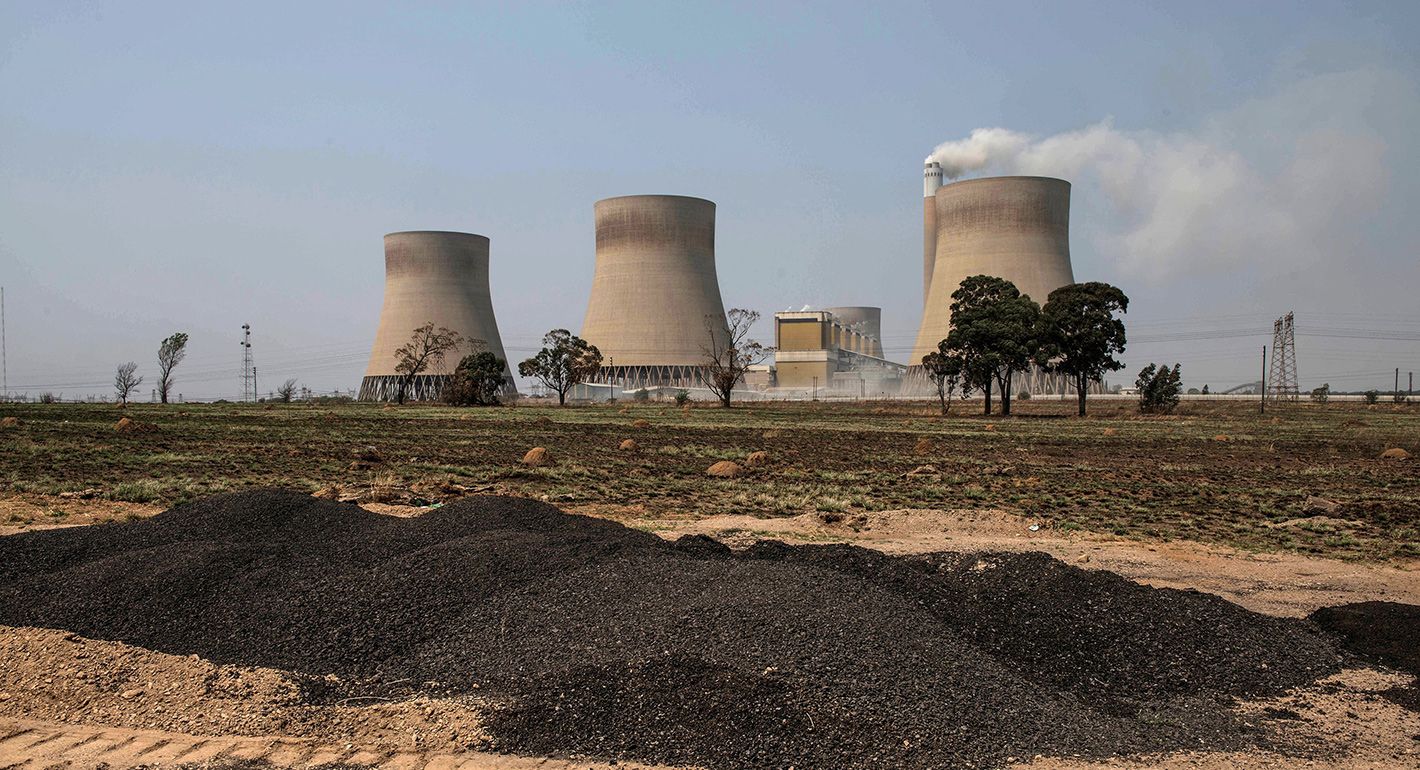
Currently, the official Western offer to help developing countries transition to clean energy is incomplete. The Just Energy Transition Partnerships (JETPs)—blended, G7-led, public-private vehicles combining concessional loans, minimal grants (under 5 percent of an overall project) and strict conditionalities—were meant to show that the G7 and partners could mobilize serious finance for coal-dependent and transition-exposed economies. South Africa, Indonesia, Vietnam, and Senegal became the poster children. But the JETP model has struggled to become a sovereign-scale, industrial-financial proposition. It is fragmented across donors, development banks, guarantees, private capital hopes, grants, loans, and technical assistance. The packages are complex, uneven, and insufficient against the scale of transition needs.
The members of each existing JETP agreement must choose a highest priority: emissions mitigation or energy expansion.
Alexander Csanadi, Daniel Helmeci
The average Global South finance minister is not choosing between a perfect Western offer and a dangerous Chinese one. Other actors are in the wings—such as Gulf sovereign vehicles like Masdar, a UAE state-owned clean energy company; Japan’s Tokyo International Conference on African Development, with renewed commitments through the Japan Bank for International Cooperation; and regional development banks. Through these mechanisms, an increasing interest in South-South investors can now be seen. Furthermore, Western multilaterals have broadened their menu beyond JETPs: the European Investment Bank’s Global Gateway instruments and the World Bank’s Climate Investment Funds offer genuine concessional pathways, but they typically arrive with conditionality and procurement rules, such as mandatory alignment with EU environmental standards and supplier eligibility limitations. These rules add to the complexity of a choice that finance ministers must make between what is readily available when their budgets are under stress. Policy and legal advice—via grant-financed technical assistance, equipment procurement standards, foreign technical specifications, and donor coordination—all have value, but none of them buys buses, batteries, solar modules, or, most importantly, time. And no Western instrument yet combines the scale, speed, scope, and sovereign flexibility that defines the China offer at its best. Where the Western menu offers a plethora of ingredients and new flavorings, the Chinese one offers the meal—ready-made and warm.
The first Chinese advantage is cheap finance. In April 2022, a measure known as the ten-year sovereign yield spread between U.S. and Chinese government bonds became positive, meaning that China can raise domestic capital more inexpensively than the United States can. As sovereign lending sets the floor for all downstream lending, Chinese policy banks can extend loans to the Global South at rates Western institutions cannot match (see figure 1). Sovereign ten-year yields determine domestic borrowing costs for mortgages, car loans, and infrastructure project finance. By April 30, 2026, the U.S. ten-year yield stood at 4.39 percent and China’s ten-year yield at 1.75 percent: a 264-basis-point gap.1 Critically, the spread has remained above 200 basis points for eighteen consecutive months, from November 2024 to April 2026, costing a borrower more than $20 million in additional annual financing for every billion dollars raised at U.S. rather than Chinese rates. In May, the spread widened further as U.S. thirty-year yields rose to highs not seen since 2007.
Climate finance is increasingly a cost-of-capital contest: Financing costs make up a large share of renewable projects, for example a wind power project that does not face fuel costs. Physical equipment requires financial capital long before it will deliver any fiscal relief. Fortuitously, China can now transmit that lower cost of sovereign capital in the form of cheap financing through its policy banks, export-credit structures, renminbi (RMB) corridors, and state-directed industrial finance operations at the exact moment energy-importing sovereigns need to fund electrification. In contrast, currently the dollar system prices emerging-market risk expensively, and multilateral or G7 finance arrives slowly or only partially. So, a lower-cost Chinese finance becomes attractive for emerging markets on a pure cost basis, quite apart from any ideological considerations related to closer ties to China versus the United States. The spreadsheet speaks first.
Furthermore, the differences between the Chinese and U.S. costs of capital may prove durable due to China’s declining working-age demographics and large private-sector debts. China is aging more than twice as fast as the United States, and aging populations are associated with depressed interest rates. Any market-driven rise in Chinese bond yields will be slow, and, most probably, slower than the United States, comparable to the experience of Japan. These deflationary dynamics—demographic in origin, structural in character, and repeatedly confirmed in the data—make a sustained rise in Chinese bond yields unlikely for the remainder of this decade, and with it, the cost of capital advantage durable. The World Economic Forum’s June 2026 economic analysis confirms continued weakness in the Chinese economy, with consumer price index (CPI) inflation at 1.2 percent, below the government’s 2 percent target, and a housing market that has yet to find its floor.
Demographics, however, are only part of the story. China also suppresses its borrowing costs through mandates that direct state banks to hold government debt at administered rates and that maintain capital controls, trapping domestic savings inside a system that generates negative real returns for households, who have few alternatives. The result is a cost of capital that is partly a market outcome and partly a policy artifact.
Already, the rate gap is changing sovereign debt strategy for capital-intensive renewables. Kenya converted $3.5 billion in dollar-denominated loans that were pegged to the U.S. market rate into RMB-denominated loans with a fixed interest rate of 3 percent, reportedly saving the government more than $200 million a year. This is the yield spread alone. Ethiopia started similar conversations with China in October 2025 and is still negotiating in April 2026. Both countries’ renegotiations show that the sovereign conversation is shifting from who lends to which currency carries the transition balance sheet.
China’s second advantage is that it can also finance what it manufactures—electrotech. China continues to dominate the core clean-technology supply chains. In solar panel manufacturing, its share of the supply chain exceeds 80 percent across polysilicon, ingots, wafers, cells, and modules, and was projected to approach almost 95 percent in polysilicon, ingots, and wafers through 2025. In 2024, China installed up to 357.3 gigawatts of solar photovoltaic capacity, nearly 60 percent of global additions, underscoring the scale behind that dominance. In electric vehicles, China was responsible for nearly 80 percent of battery cell production in 2024.
China’s monthly electrotech export data—compiled at Ember, a UK-based clean energy think tank—tells the story better than any policy document (see figure 2). Monthly exports of solar panels, batteries, electric vehicles, grid equipment, wind turbines, and heating and cooling systems averaged $15–16 billion across 2024, then surged to a full-year total of $223 billion in 2025—a 21 percent jump in a single year. March 2026 alone hit $25.8 billion, a record driven by accelerated purchases due to the Strait of Hormuz shipping tensions and a rush to beat an expiring export tax credit. Behind every shipment sits a financing arrangement: project facility, export credit, or trade finance drawn against the importing country’s own receivables. The question for developing-country policymakers buying growing volumes of electrotech is not whether this trade is financed, but through which monetary corridor and on whose terms.
China does not merely bring cheap finance and electrotech to the energy transition. It also brings contractors, export credit, policy banks, and, increasingly, RMB liquidity and payment infrastructure. China provides financing facilities, which finance individual projects, as well as a system—the lender, the vendor, the currency, the equipment, and the route by which payment moves. This approach transforms the lending advantage into a systems advantage.
Parts of this system already exist, and the rest is being built. China has an extensive network of local-currency bilateral swap agreements (BSAs). The central bank, the People’s Bank of China, had thirty-two BSAs active in May 2025, representing the monetary plumbing necessary for building this new architecture. A swap arrangement is an agreement between two central banks to exchange their respective currencies for a certain time period at a certain exchange rate. The United States provides swaps via the Federal Reserve Bank for financial system stability, such as with the Bank of England and the European Central Bank, and via the U.S. Treasury Department, through the Exchange Stabilization Fund, for foreign policy or political reasons, such as with Argentina. For China, a swap is a way to ensure that trading partners, including those purchasing electrotech, can have ready access to RMB without having to go through the dollar first. Nigeria shows why BSAs matter. Under the 2018 Nigeria-China currency-swap agreement, valued at RMB 15 billion ($2.5 billion), Nigerian importers buying Chinese goods could directly access billions of renminbi rather than first converting their currency into dollars.
The important point is not only the swap of currencies itself. It is also the institutional architecture through which it happens: The central bank in the developing country manages the swap and then supplies RMB to domestic banks, which in turn lend the RMB to companies trading with Chinese suppliers of electrotech and everything else. BSAs provide the cheapest source of financing and shift currency access from the open market to a central-bank-managed corridor.
These financing corridors, and what China can do with them, suggests we are entering a new phase in which China is seeking more than just internationalizing the use of its currency. In June 2025, People’s Bank of China Governor Pan Gongsheng argued that an international monetary system dominated by a single sovereign currency carries inherent instability and can be weaponized under geopolitical stress. He also identified blockchain, distributed ledgers, central bank digital currencies, stablecoins, and smart contracts as technologies to reshape cross-border payments.
After financing mechanisms, Beijing’s next step has been institutional buildout. China announced an international operation center for its digital RMB in Shanghai to support cross-border use and digital-finance innovation. By September 2025, that center had begun operations with three platforms: cross-border digital payments, blockchain services, and digital assets. The wholesale layer is already operational.
The renminbi itself is also changing, with the emergence of the digital yuan (e-CNY). Development began at the People’s Bank of China as early as 2014, with pilot-scale testing in major cities at the end of 2019. The e-CNY has expanded domestically, city-by-city, scenario-by-scenario, for over a decade. By November 2025, the e-CNY had handled almost 3.48 billion transactions totaling 16.7 trillion yuan ($2.37 trillion)—the largest live central bank digital currency deployment in the world. Since January 2026, in China, commercial banks have had to pay interest on digital yuan wallet balances; e-CNY deposits will be treated the same way as conventional cash bank deposits.
In the context of clean energy capital costs, the emergence of the digital yuan is important because it brings programmability—the ability to define, in advance, how money moves and what it can be used for. China’s central bank, as cited in central bank material, is looking at how the e-CNY can be used to establish “smart contracts.” For example, once the terms of a loan are set, they can be embedded in the code that determines how and when the digital currency can be used. Contract enforcement is automated; if the terms are not met, the system automatically denies payments. In China, a version of this was already tried at home. During the COVID-19 pandemic, the government distributed consumption-restricted digital yuan in Shenzhen and other cities. These coupons were programmable only for designated merchants within defined time windows.
For climate finance, this changes the bargain. A loan agreement can require that funds should be used to purchase eligible Chinese solar equipment only. A payment corridor can route that payment, and a programmable payment system can make the condition binding. The recipient does not need to promise compliance; the payment becomes impossible outside the permitted corridor. The rate advantage, the manufacturing base, the policy banks, the RMB corridors, and the digital-payment infrastructure all assemble into a single, patient offer—the ElectroYuan.
There are real advantages to this system. It reduces leakage, speeds disbursement, and reassures the (Chinese) lender. It can verify the vendor’s payment, lower transaction risks, and make the energy transition finance cleaner, faster, and more auditable. In short, it delivers programmable green finance.
Despite the benefits, China’s finance ecosystem is also potentially a threat to sovereignty. The question is not whether China is benevolent or predatory. Like the G7 architects of the JEPTs, China is designing climate finance around its strategic interests, institutional leverage, and delivery capacity. It has the option to choose, price, route, and deploy favors in a time of crisis. That is power.
Global South governments, reeling from the Hormuz shock, must remain pragmatic. If the Western alternative is partial, delayed, and more expensive, Chinese transition finance appears to be the responsible choice. However, passive acceptance would prioritize liquidity over sovereignty. Cheap finance is not neutral when it arrives embedded in a monetary, industrial, and technological stack.
Global South governments do not need warnings about China. They need offers that match or improve upon China’s. If the dollar system is expensive, the multilateral pipeline slow, and the Western plate half-empty, the Chinese meal is not a trap—it is the only meal being served. The question is what to negotiate when sitting down at the table. Global South officials need to understand the full implications of any negotiation around programmable financing.
If the dollar system is expensive, the multilateral pipeline slow, and the Western plate half-empty, the Chinese meal is not a trap—it is the only meal being served.
Global South finance ministers and central bank governors must negotiate their full sovereign position before any code is written and before any digital yuan flow. Three decisions are critical:
If these questions are decided thoughtfully and transparently, with the interests of the developing country in mind, the Global South finance ministers and central bankers should be able to say the quiet part clearly: This is not import dependence. It is strategic importation for energy sovereignty—bringing in the electrotech goods, services, and production equipment needed to build domestic assembly, manufacturing capacity, and long-run insulation from imported fuel shocks. Thoughtfulness, here, has a precise meaning: securing terms that prevent the transition from replacing fuel dependence with technology dependence by negotiating technology transfer provisions, local content requirements, and interoperability standards that keep options open. And if Chinese financing is the cheapest, then Global South finance ministers are not only entitled to use it—but they are also entitled to further demand that it arrives on terms befitting a public good: non-commercial, sovereignty-preserving, and concessional, something that is rarely said of Chinese financing.
Ebipere K. Clark
Managing Partner, Frontier-Alpha LLP; Visiting Fellow, Africa Policy Research Institute (APRI)
Ebipere K. Clark is Managing Partner at Frontier-Alpha LLP and a visiting fellow at the Africa Policy Research Institute (APRI). He works at the intersection of African and Global South sovereign finance and monetary and financial markets.
Carnegie does not take institutional positions on public policy issues; the views represented herein are those of the author(s) and do not necessarily reflect the views of Carnegie, its staff, or its trustees.

Batteries are essential technologies for twenty-first-century growth, security, and energy—and they cut to the core of geopolitical ambitions for high-tech strategic autonomy.

Milo McBride

The groundbreaking legislation faces an uphill battle, but it creates a framework for others to follow—especially as the effects of climate change intensify.


Liliana Gamboa, Kayly Ober

Natural disasters are no longer local incidents but sources of systemic risk that threaten vital infrastructure and the economy—and public support for international engagement.

Leonardo Martinez-Diaz

It’s the early days of a new architecture for disaster recovery. Now is the time to build a better, more adaptive funding ecosystem.


Sarah Labowitz, Katie Mears

Examples from Virginia and Lake Tahoe reveal complex situations that governments could use to fund critical grid upgrades.


Kate Gordon, Noah Gordon