

Paper
The U.S.-Iran war has crossed a dangerous threshold: water infrastructure in the Gulf is now a target. Ecological statecraft is no longer peripheral to security, it's part of its foundations.
Olivia Lazard, Ali Bin Shahid
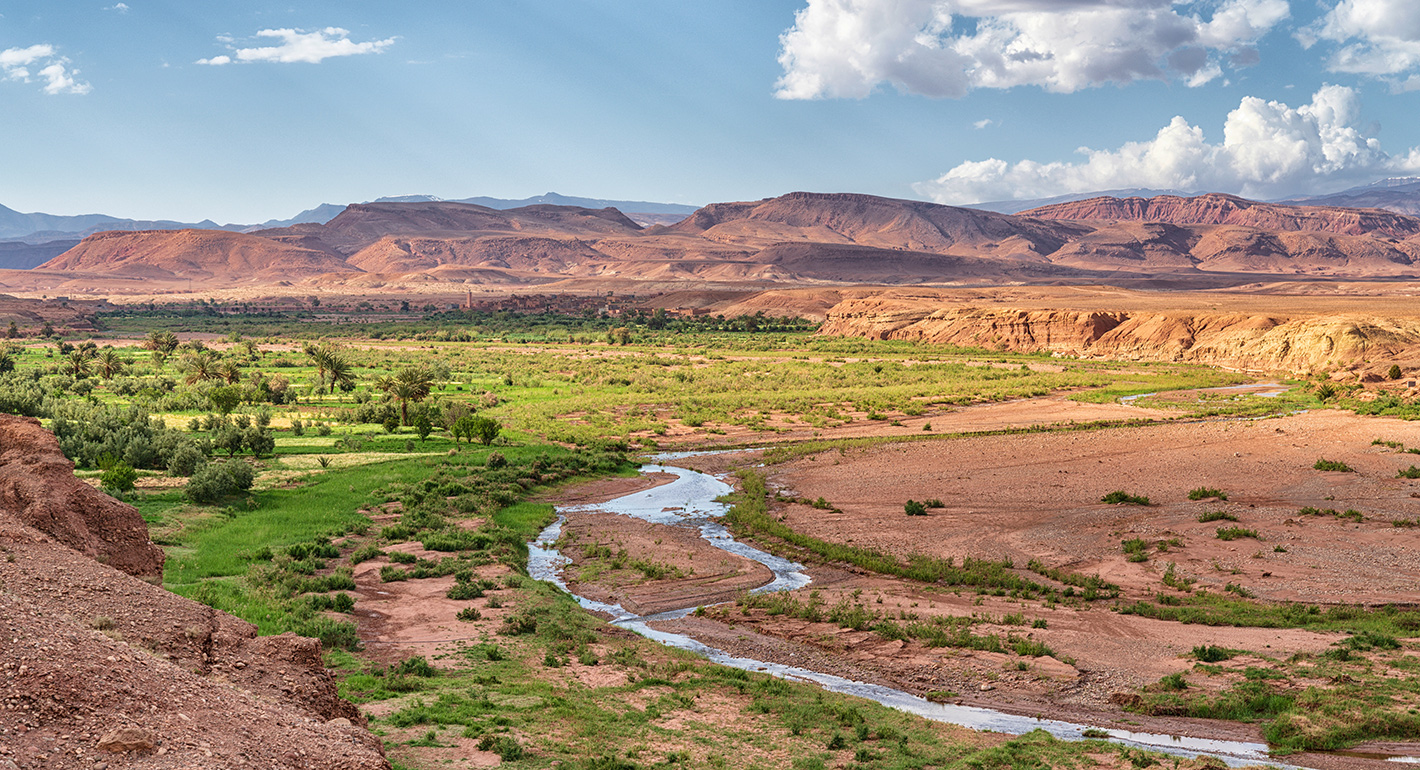
Source: Getty
If Indigenous land and water dispossession is ignored, climate adaptation strategies risk reproducing inequalities and worsening acute climate vulnerability.
On April 15, 1928, French administrators, agronomists, and planters in the protectorate of Morocco convened in the heart of Casablanca for the Journée de l’arbre fruitier—Fruit Tree Day. A special guest had arrived from across the Atlantic, bringing with him a vision that would leave the attendees enthralled and, in the coming decade, transform the agricultural landscape of the North African colony.
Monsieur Laguerre, the French commercial attaché in San Francisco, opened his remarks by noting the similarities between California and Morocco: Mediterranean climates; a mixture of mountains, fertile plains, and desert hinterlands; rich soils; and abundant but unreliable water supplies fed by rainfall, snowmelt, and aquifers. He then described his astonishment crossing the Central Valley in California by train, watching mile after mile of “vast orange groves and immense orchards” roll past his window. The industrial scale of these water-intensive citrus fruits, he said, was a testament to the state’s feats of irrigation. And with the right expertise and technological investments, the same scheme could be applied in Morocco, turning a costly and underperforming colonial possession into a money-making engine.
That meeting, according to a leading ecological historian of Morocco, marked the start of a concerted effort to copy California’s hydraulic and agricultural example. Over the following years, in what French officials framed as commercial espionage, teams of engineers and scientists were dispatched to the Golden State to study how pipelines, aqueducts, and dams could capture and redirect water toward large-scale irrigation for lucrative export crops—tangerines, lemons, grapefruits, and an array of other fruits and vegetables—along with dairy operations.
The effort proved a success. By the 1930s, French legislation to reorganize land rights and an entirely novel Moroccan Water Code facilitated the full embrace of the so-called California Model. Outputs of high-value fruits expanded accordingly, eventually comprising roughly a third of all agricultural exports.
Yet the project came with steep costs.
To be sure, its dazzling productivity enriched the French colonial elite and the metropole as well as Moroccan political elites often associated with the monarchy. Yet it also demanded a drastic reordering of land tenure and modernizing of ecological management. Time-honored and more sustainable methods of cultivation, irrigation, and livestock husbandry were cast aside. Water, which was once regarded as a scarce and irregular resource to be stewarded and shared, was now treated as a commodity to be controlled and regulated. Access to it became uneven. Most significantly, however, the grandiose agricultural scheme was fundamentally misaligned with Morocco’s natural endowments—a mismatch that global warming and its attendant effects of declining rainfall and extended droughts have only exacerbated.
“Mother nature is sending clear messages, and of course these messages are getting even harder [to ignore] with the climate change phenomenon,” noted Mohamed Taher Sraïri, a leading Moroccan agricultural scientist who has written on the deleterious effects of the California Model.1
Today, he points out, the heaviest burdens of climatic warming in Morocco—and of the colonial water legacy—are borne by the country’s most vulnerable rural inhabitants, whose ancestors were pushed out by the California-inspired orchards fed by an expanding network of dams: smallholder farmers, oasis dwellers, Indigenous Amazigh (plural Imazighen), and pastoralists.
But these communities are hardly passive victims. In recent years, local organizations, civil society groups, and farming unions have mobilized around climate change, demanding greater inclusivity from Moroccan authorities and, in some cases, working to revive traditional ecological knowledge—especially related to water governance and farming.
Meanwhile, in California and the broader American West—the source of Morocco’s colonial borrowing—a parallel reckoning is underway. There too, the dispossession of Indigenous peoples from land and water (see figure 1), and the erasure of traditional and more equitable forms of agriculture, formed the foundation of the region’s hydraulic system (involving dams, reservoirs, and interbasin transfers) during a period of intense White settler expansion and technological triumphalism. And just as in North Africa, Native peoples are now challenging the long-standing assumptions behind industrial water management and large-scale agribusiness, pressing federal and local governments to reinstate lost rights and reconsider ancestral practices of crop cultivation and hydrological stewardship.
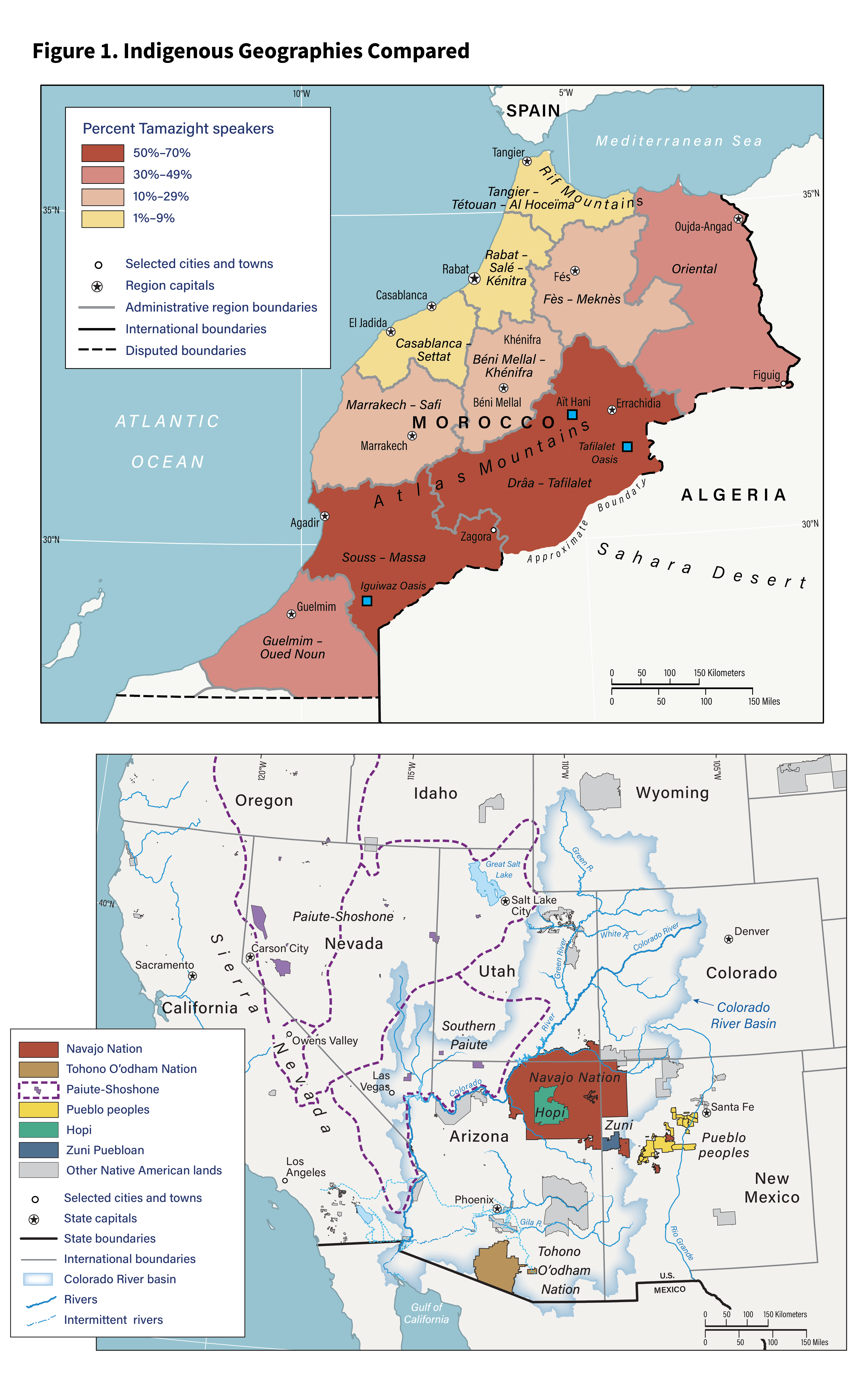
Taken together, striking parallels emerge between the two seemingly disparate regions—in the legacies of imposed, extractive water regimes; in their climatic toll today on vulnerable Indigenous and rural communities; and in those communities’ responses. Such a comparison does not flatten socioeconomic and political differences between the cases, nor does it overidealize their historical pasts. Rather, it highlights how Indigenous techniques of land and water stewardship may offer forms of climate resilience better aligned with the ecological limits that colonial-era planners and big-business planters ignored, and that global warming has now clarified and sharpened.
For many Native and rural peoples in both Morocco and the American West, global warming is only the latest—and unsurprising—outcome of a long history of imposed extraction and dispossession. To fully protect themselves against its varied effects, many are now demanding that government-directed climate policies and green energy projects be linked to efforts to redress the legacies of colonial water regimes—lest those projects reproduce preexisting inequities. In tandem, activists are positioning themselves on climate adaptation as partners and agents whose traditional ecological knowledge can help drive more effective policies. A comparison of their strategies and activism can further yield a set of best practices and lessons learned, tailored to the specificities of each locale, for civil society, governments, and outside donors alike.
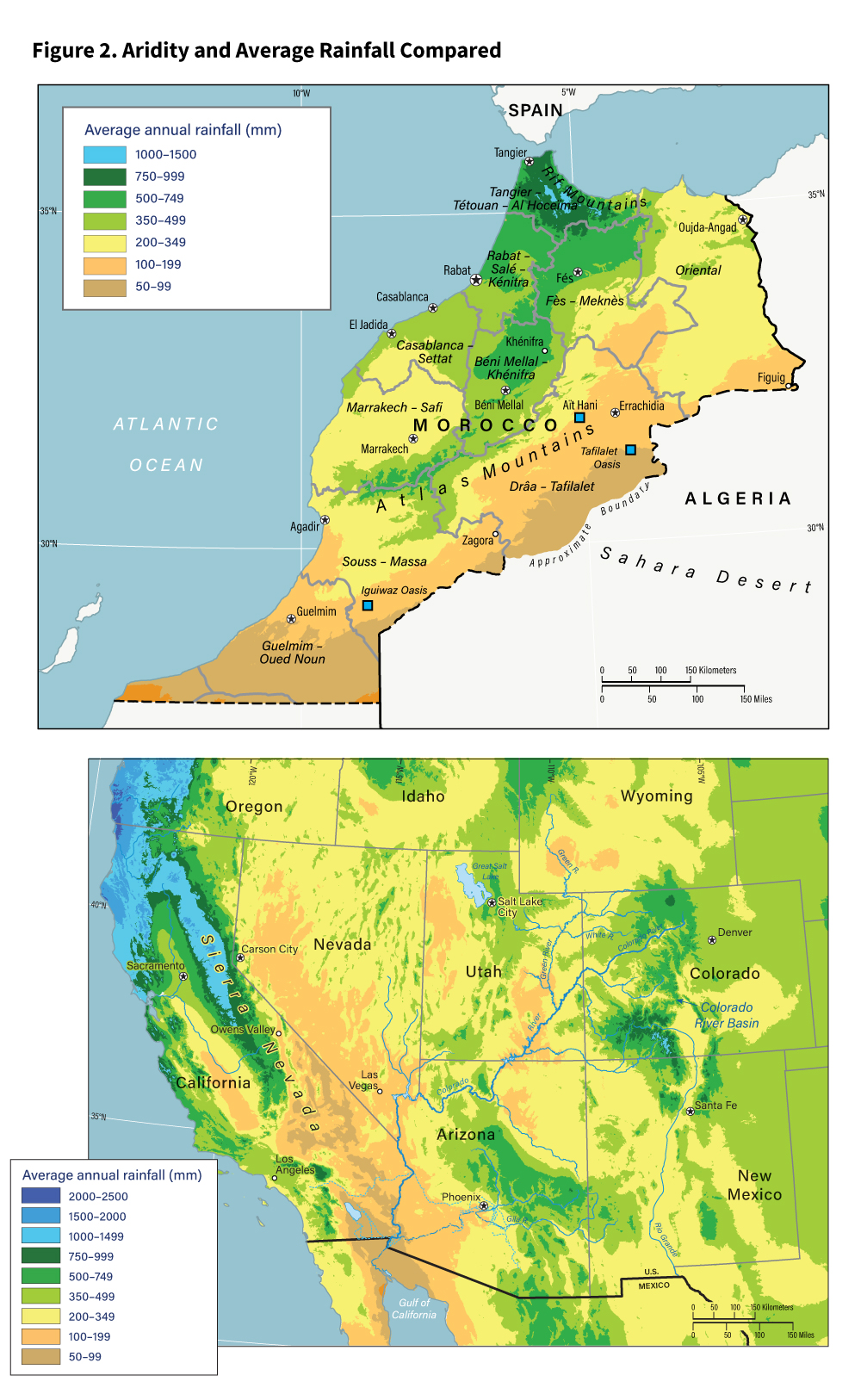
Though separated by an ocean, Morocco and the American West are similarly afflicted by the effects of global warming, including rising temperatures, intensifying droughts, volatile precipitation, and the compounding risks of wildfires, floods, and groundwater depletion. In both regions, moreover, despite the presence of substantial—if uneven—state capacity, these consequences are not felt evenly: Rural, poor, and especially Indigenous communities in the most water-stressed areas bear a disproportionate share of the burden (see figure 2).
In Morocco, these impacts are especially acute. Roughly 93 percent of the country’s land is classified as arid or semiarid. Desertification has been advancing steadily northward, driven by droughts that have grown both more frequent and more intense. Heat waves have likewise become more common, decreasing crop yields and fueling wildfires that are destroying the country’s already fragile tree coverage and biodiversity.
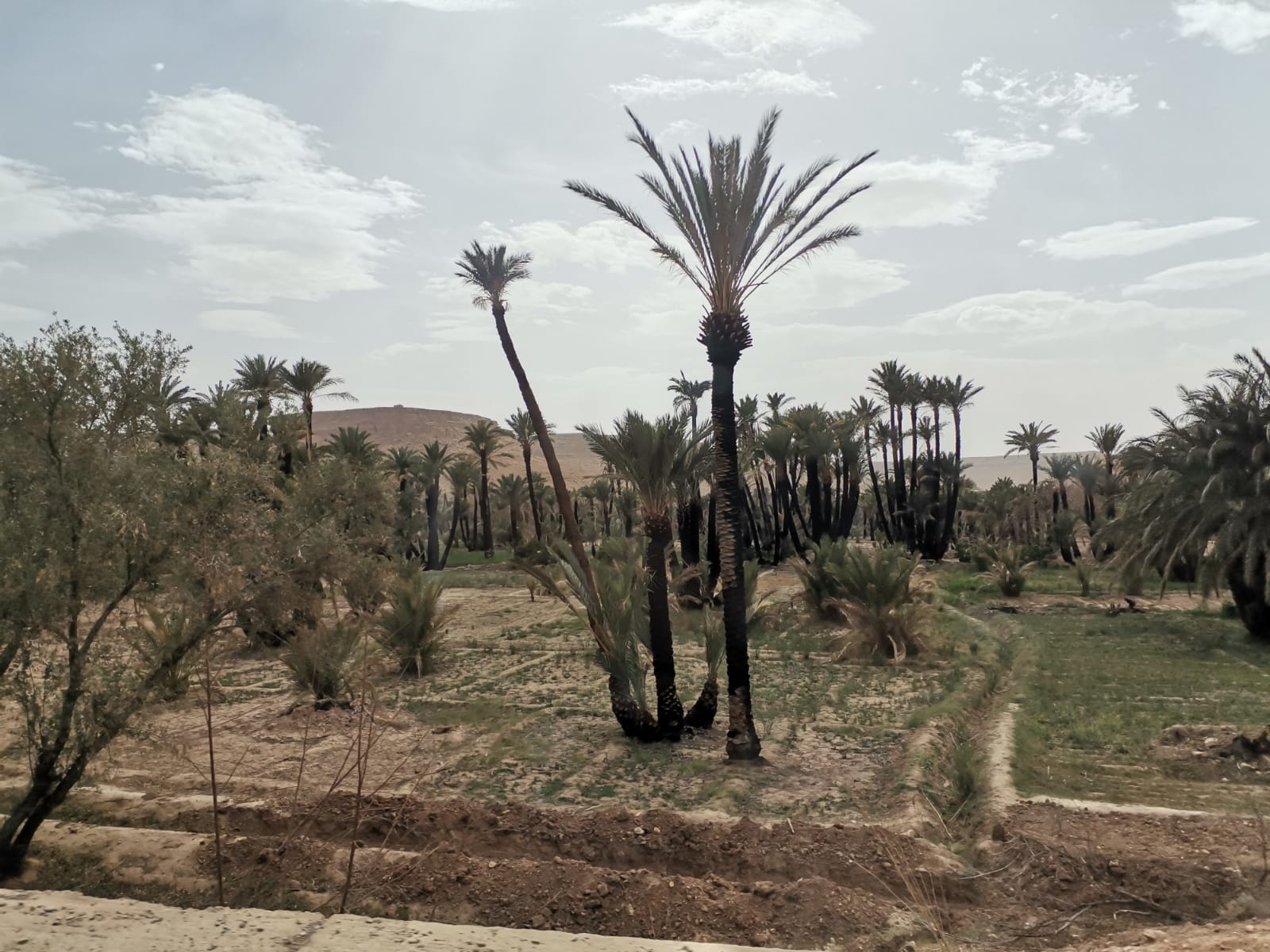
Burned palm trees in an oasis community in Drâa-Tafilalet.
Source: Courtesy of Said Skounti.
Water insecurity is at the center of these risks, with scarcity only compounding under intensifying climate pressure and governmental mismanagement. In 2023, the World Resources Institute ranked Morocco among countries facing “high” water stress, defined as using between 40 and 80 percent of available water supplies, over twice as much as ideal usage levels. Decades of groundwater depletion—a product, in part, of the protectorate-era crop strategy—have worsened these shortages, as have more recent but similarly misguided policies such as drip irrigation powered by groundwater wells and a shift toward the privatization of water delivery.
Morocco’s response to climate change presents a mixed picture. On the one hand, compared to other countries in the Middle East and North Africa—and even globally—it is relatively well equipped in terms of institutional capacity and renewable energy development. And it has enacted an ambitious set of plans to exceed its Paris Climate Agreement pledge to reduce carbon emissions by more than 45 percent by 2030 through desalination plants, green hydrogen facilities, and wind and solar projects.
Yet on the other hand, this foresight and capacity has not always translated into targeted water conservation policies and adequate protection for vulnerable communities already experiencing climate shocks.
Among the Moroccans hardest hit are those dependent on agriculture for their livelihoods. Agriculture accounts for roughly 10 percent of GDP but employs around 30 percent of the active population—approximately 11.5 million people. Beyond those working the land, hundreds of thousands of shopkeepers and tradespeople also depend indirectly on farming incomes. Oasis dwellers and smallholder farmers are especially vulnerable: Throughout the country’s southern and southeastern regions, these communities face declining rainfall, vanishing groundwater, desertification, and flooding, with devastating social and economic consequences. As one civil society member put it in the drought-afflicted oasis of Figuig, “Because of the difficulties linked to the climate, many families are thinking about emigration. The youth are leaving. The number of inhabitants is diminishing, and the city could eventually disappear with our culture and traditions.”2
Morocco’s Amazigh citizens, comprising an estimated 30 to 40 percent of the population, feel these pressures acutely. Although Amazigh peoples are widely recognized by international organizations, scholars, and advocacy bodies as the original inhabitants of the Maghreb—whose presence predates Arab conquests by millennia—the Moroccan state does not formally recognize Amazigh peoples as “Indigenous peoples” under international legal instruments such as the International Labour Organisation’s 1989 Indigenous and Tribal Peoples Convention or the UN Declaration on the Rights of Indigenous Peoples. Instead, Morocco’s domestic legal framework prefers cultural and linguistic recognition without adopting the collective political and land rights associated with Indigenous status in international law.
Today, Amazigh speakers constitute at least a third of Morocco’s rural community, and their vulnerability as farmers, oasis inhabitants, pastoralists, and nomads is exacerbated by long-standing ethnolinguistic and regional marginalization under an Arab-majority and urban-dominated government. In the Amazigh-majority regions of the Atlas and Rif Mountains—as well as predominantly Arab rural areas—government services are often seen as substandard by local inhabitants, with the result that global warming effects like drought, desertification, and water scarcity are layered upon preexisting grievances against the state. The legal status of Amazigh peoples has improved somewhat since the constitutional reforms of 2011, including language recognition and an identity acknowledgement, but the communities’ protests have continued amid broader demonstrations against systematic neglect and direct maltreatment, especially in Amazigh-majority areas. In other areas, similar dissent has occurred amid a consistent rural exodus to large cities, spurred by a sense of frustration at the government’s uneven development policies.
Climate change effects like droughts and heat waves are threatening the agricultural livelihoods of the Imazighen, exacting a devastating toll on communities’ traditional and often more sustainable irrigation systems—and, as discussed later, the government’s hydraulic policies have added to their vulnerability. Relatedly, climate-induced deforestation has caused the decline of argan trees and their oil, which is made into profitable cosmetic products by Amazigh women. Furthermore, many Imazighen are engaged in pastoralism and suffer nomad-specific vulnerabilities, namely the reduction in grass and water resources for livestock and arbitrary government transfers of common land to private users.
Many Imazighen report feeling trapped; unable to pursue a pastoralist livelihood because of climate change, they are equally unable to transition to agriculture because of water scarcity and uneven distribution resulting from the government’s water policies.3
In California and the American West, climate change is producing similar heat waves and droughts, beyond historical variability. Here, however, local authorities and the federal government possess greater fiscal and technical capacity to meet these challenges than Moroccan authorities do. California alone is allocating tens of billions of dollars for climate adaptation and green energy initiatives, while both federal and state jurisdictions maintain extensive climate science infrastructure, monitoring systems, and modeling capabilities. Private-public partnerships are similarly more robust, especially between state governments, universities, and local civil society groups, including those representing tribal nations.
That said, this capacity advantage is offset somewhat by the U.S. system of federalism, which disperses authority across federal, state, tribal, and interstate institutions. The result has been delayed and uneven adaptation efforts that are often vulnerable to political swings and coordination problems, as exemplified by protracted negotiations around water shortages in the Colorado River Basin, which contains land belonging to some thirty federally recognized tribal nations. Most critically, despite the American West’s superior resources, distributional problems persist: The capacity exists, but policymakers have not always deployed it equitably.
As a result, vulnerable Indigenous and rural communities in California and the broader Southwest continue to suffer an outsized share of climate stresses, such as warming, droughts, rising sea levels, and wildfires, which in many cases are compounded by lingering inequalities stemming from the region’s historic hydraulic order. The scale and severity of these climate stresses are well-documented. California’s Fourth Climate Change Assessment projects average annual temperature increases of 5.6 to 8.8°F by the end of the century, with cascading consequences for hydrology, ecosystems, and public health. Since 2007, drought has become a near-constant feature, interrupted only by brief and increasingly volatile wet years. Prolonged dry conditions have desiccated soil and vegetation, laying the groundwork for catastrophic wildfire. Fifteen of California’s twenty most destructive fires have occurred since 2015, underscoring how rising temperatures, drought, and land-use patterns reinforce one another.
Water insecurity lies at the center of these risks. The Sierra Nevada snowpack, which has historically supplied roughly 30 percent of California’s water, is projected to decline sharply as warming temperatures shift precipitation from snow to rain. Climate models anticipate a reduction of more than half of peak snowpack water volume by mid-century and close to 80 percent by the century’s end. As snowpack diminishes, winter flood risk increases while spring and summer water availability contracts. Sea-level rise compounds these pressures, threatening coastal aquifers—particularly the Sacramento–San Joaquin River Delta, which provides drinking water to roughly two-thirds of Californians and is highly vulnerable to saltwater intrusion.
As in Morocco, there are vast differences in how the consequences of climate change are felt among citizens. But unlike the North African state, Indigenous peoples in the United States are formally recognized as sovereign political entities, organized into roughly 182 federally recognized tribes across California and the Southwest, with treaty rights and standing in federal law. At the same time, they face legal and infrastructural constraints on water access rooted in earlier waves of dispossession and exclusion, which was often accompanied by genocidal levels of violence. They continue to bear the brunt of exposure to global warming effects like heat and drought, in part because many tribal lands are located in arid or semiarid regions, often a direct product of systematic dispossession and forced removal to undesirable land. In nearly every instance, these effects are exacerbated by these communities’ resultant high rates of poverty as well as their inadequate access to health and community services.
Like their counterparts in Morocco, many Indigenous people see their current vulnerability to climate change as intrinsically linked to the earlier dismantling of their traditional systems of land and water stewardship.
To understand fully why the impact of climate change has been so unevenly distributed, it is necessary to examine the hydraulic systems that sustain large-scale agriculture in both regions.
In both Morocco and the American West, colonial and settler governance rested on a shared logic: Arid landscapes were seen not as delicate ecosystems requiring restraint and negotiation, but rather as untapped assets awaiting exploitation through technology. This marked a break from earlier systems of land and water management that emphasized an adherence to seasonal fluctuations in rainfall, communal governance, and an abiding respect for what the natural environment could tolerate.
In both regions, this transformation unfolded along two mutually reinforcing paths: changes in what was grown and who controlled land, followed by interventions into how water was captured, stored, and redistributed.
In Morocco, legacies of both land use and water policies have been especially far reaching. Fundamental shifts in Morocco’s legal, agricultural, and infrastructural landscape have entrenched a centralized, industrial-scale water regime at the expense of sustainable, traditional practices. As such, this transition has traded sustainability and adaptation capacity for untenable agricultural development goals.
The legal organization of the country’s natural resources has played a fundamental role, facilitating the mass transfer of land and water over the past century. The process began largely under the French Protectorate, which manipulated tribal treaties to privatize and purchase Morocco’s most fertile agricultural land while simultaneously declaring water a public resource under French control. This approach led to the consolidation and development of colonial agricultural holdings in favor of political and economic elites.
Imazighen living in the protectorate suffered disproportionately during this process, through the expropriation of land, grazing corridors, and water sources. By the end of the 1930s—the conclusion of the California Model project—an estimated 20 percent of these Indigenous people were living in conditions of starvation or near-starvation.
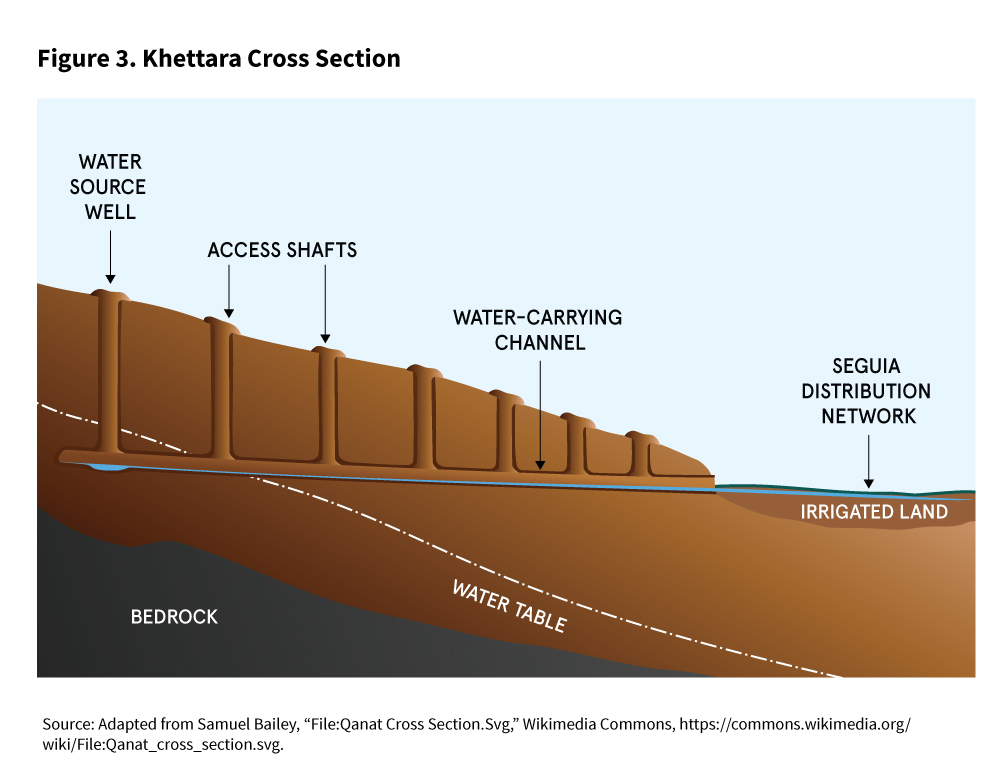
Despite their occasional romanticization of the Amazigh peoples and the granting of limited privileges, French administrators viewed their mountainous homelands as fundamentally backward, rebellious, and less productive than the irrigable plains. As a result, the protectorate’s hydraulic policies increasingly captured and redirected surface and groundwater fed by the Atlas and Rif Mountains toward the lowlands of the protectorate. Ancestral Amazigh irrigation practices such as khettaras and seguias—traditional below- and above-ground canal systems that naturally recharge aquifers while equitably delivering water (see figure 3)—were disrupted, causing lasting damage upstream. Throughout this process, French administrators ignored the fact that mountain hydrology and ecosystems—which had been respected and maintained by Indigenous practices—were essential for the environmental health of the plains.
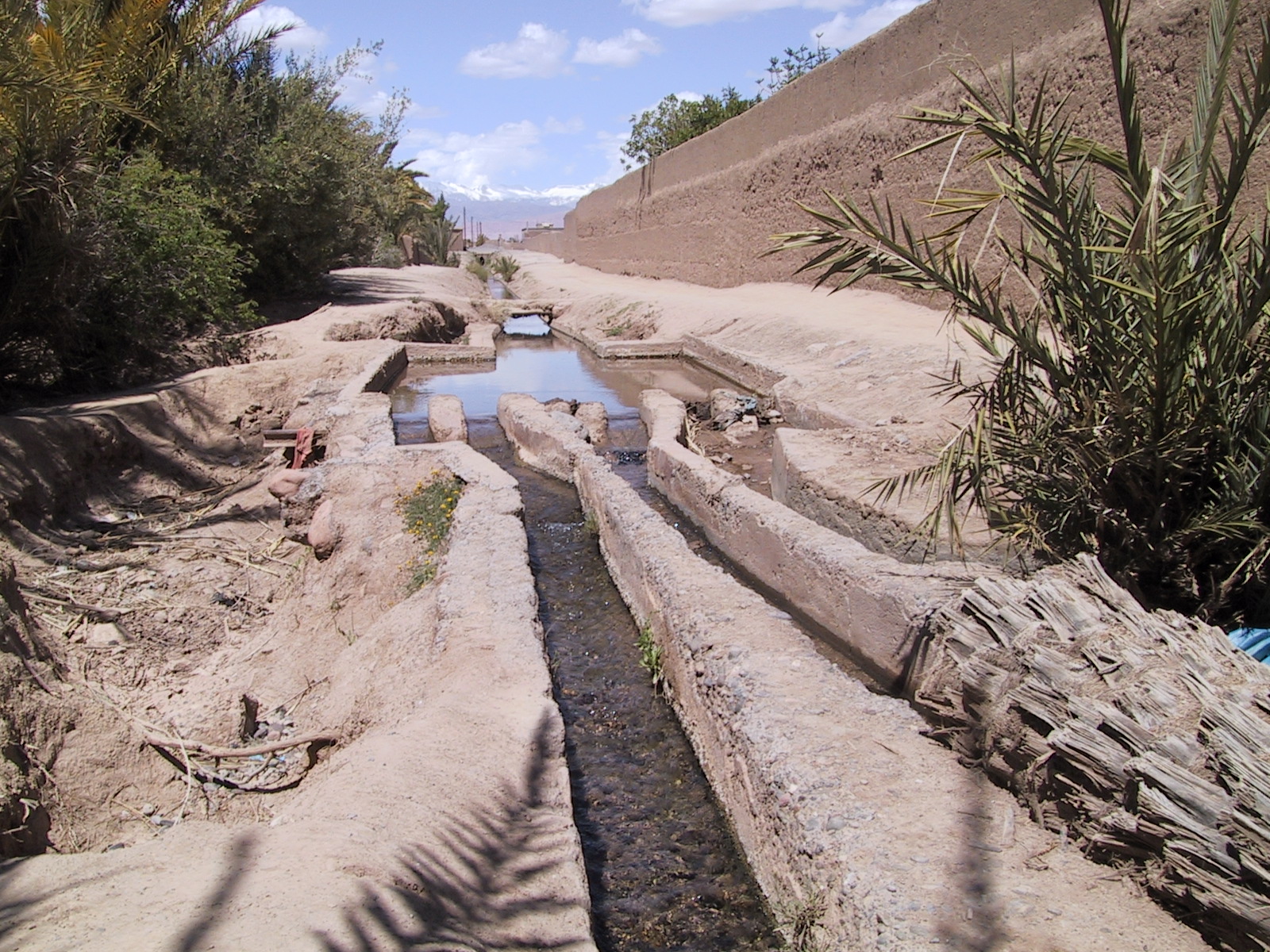
A seguia in the Skoura Oasis of Dades Valley in Drâa-Tafilalet.
Source: ScarabéeGris - Own work, CC BY-SA 4.0, Wikimedia Commons, https://commons.wikimedia.org/w/index.php?curid=87516154.
Though territorial administration changed with Morocco’s independence in 1956, bureaucratic and legal efforts to overturn traditional, communal forms of land and water stewardship did not. In the decades that followed, Morocco’s successive rulers continued to use expropriation and legal maneuvering to consolidate control. In 2023, roughly three-quarters of the country’s agricultural land was privately owned, and the enactment of Law 83.21 has begun shifting drinking water distribution toward a more commercialized, multiservice corporate model.
This transition has been catastrophic for smallholder farmers and traditional agricultural communities. In the oasis town of Figuig, for example, the proposed reforms to water governance sparked sustained protests, as locals argued that the changes would compound the effects of climate-induced drought and perpetuate a long-standing pattern of substandard public services.
Centralized and privatized systems of water management have also degraded and dismantled earlier regimes of equitable distribution rooted in Amazigh custom and Islamic law. Designed originally to mitigate conflict, collective institutions—such as the Amazigh tanast, a communal, time-based irrigation allocator device that functioned as a sort of hydrological clock ordering water access by fixed turns, and the agdal, a system of seasonal restrictions on land, pasture, or water to allow for ecological restoration—have withered, producing economic winners and losers increasingly determined by the state.
As a result, an exodus of smallholder farmers, oasis dwellers, and mountain residents—groups long neglected by state policy—has ensued, with the country’s urban population growing from 29 percent of the total population in 1960 to 63 percent in 2024, carrying traditional agricultural knowledge away from rural areas in the process.
“For our family plot, we have our ancestral water shares, which are hardly enough for us,” noted Samira Mizbar, a socioeconomist and expert in development dynamics, particularly in oasis and semidesert areas, who is also a smallholder farmer. “The oasis population adapts to drought when it comes to traditional agriculture. When we move to modern intensive agriculture, the problems begin.”4
Monsieur Laguerre’s vision to graft the Central Valley’s fruit industry onto Morocco represents the second component of this march toward large-scale hydraulic extraction, enabled by protectorate-era land grabs. As French officials began converting colonial holdings into medium- and large-scale farms under private management, the agricultural model likewise moved toward cultivating high-value export crops, such as citrus fruits, vegetables, and almonds. But the California Model did not end with Moroccan independence. Under King Hassan II, who took the throne in 1961 after his father’s death, the country witnessed a significant increase in the production of water-intensive crops. And under his successor, King Mohammed VI, who has ruled since 1999, it saw the investment of nearly $20 billion in large agribusiness under the Plan Maroc Vert, a 2008 development strategy that extended colonial-era priorities by favoring export-oriented, heavily irrigated agriculture. In 2021, these investments earned Morocco $1.5 billion in fruit sales, constituting over a third of Morocco’s total agricultural exports.
Yet the results of this strategy have not shown a commensurate rise in sustainability or protections for the country’s rural population. Instead, the opposite has occurred, through the displacement of smallholder farms, rain-fed cereal farming, and transhumant herding. Facing prolonged droughts and insufficient water supplies due to the displacement of less water-intensive practices, farmers in some areas have begun uprooting orchards of fruit trees, with community organizers and scientists alike warning that such drastic actions are likely to become an increasingly common response. Despite this, the Moroccan government continues to expand production amid growing water scarcity.
These crop choices, however, cannot be understood in isolation from a more consequential shift: the proliferation of—and overreliance on—a built hydraulic infrastructure in the form of dams. According to scholars, such infrastructure has emerged as a key driver of the country’s water scarcity in the face of climate change.
Here again, French policy set the stage, with the construction of sixteen small-scale dams during the protectorate period. In the decades that followed the country’s independence, that number increased to roughly 300 as King Hassan II and Mohammed VI sought to expand the size of the country’s irrigable land as part of their ambitious strategies to develop the country and raise its economic output (see figure 4). But there was a political calculus too, as dams could be constructed as a reward for landowning elites, who commanded vast tracts of profitable crops and whose support was deemed essential to the monarchy’s survival.
Regardless of motive, the government’s long-term dependency on these engineered water solutions has proven increasingly problematic and deleterious for the environment, especially in the face of climate change. Repeated and prolonged droughts have left reservoirs well below capacity while sharply reducing the area of agricultural land they are able to supply. More serious has been the reservoirs’ impacts on traditional and more sustainable farming methods. Since the 1970s, dams—in addition to private pumping—have been drying out traditional irrigation technologies like khettaras and seguias.
The effects have been especially damaging for rural Amazigh communities. For example, the construction of the Hassan Addakhil dam upstream from the Tafilalet Oasis in the Amazigh-majority Drâa-Tafilalet region prevented the recharging of water tables and degraded soil fertility, increasing desertification and worsening a climate-induced drought. The result has been an acceleration of rural-urban migration and the transformation of villages into ghost towns. Relatedly, a turn to industrialized farming of dates in oases regions further diminished the aquifers that locals use for drinking and for traditional crop irrigation. Meanwhile in the Aït Hani commune of Drâa-Tafilalet, one Amazigh doctoral researcher described an effort by the Moroccan government and United Nations as ill-considered, where the project intended to rationalize water usage through the construction of cement canals—based on the mistaken assumption that time-honored irrigation practices were wasting water downstream—yet ended up intensifying the scarcity of water for agriculture and creating social conflict among Amazigh villages.5
Despite this mounting ecological and social toll, Morocco faces significant technological and fiscal challenges in reforming its agricultural sector and ensuring the equitable distribution of water under conditions of accelerating climate change. Yet these constraints alone do not account for the persistence of the current water regime. Equally important are political obstacles, such as coalitions of large agribusinesses who benefit from the status quo.
The United States is not directly analogous to Morocco, given the two countries’ profoundly different political systems, economies, and the uneven ways climate change has affected Indigenous peoples and their water needs. Still, California and the broader American West offer an instructive comparison. Like Morocco, these regions underwent a decisive paradigm shift during the consolidation of settler-colonial rule, as communal and Indigenous water systems were displaced by centralized land and water management, the expansion of water-intensive agriculture, and a growing reliance on what were considered large-scale hydraulic solutions to arid climates.
Though not reaching the same level of privatization as Morocco, the early legal story of land and water in the American Southwest is nearly identical to French approaches. Beginning in the 1800s, the U.S. federal government acquired vast tracts of land through semi-legal maneuvers, manipulating treaties with Indigenous communities before transferring much of those landholdings to White settlers. But where Morocco has moved toward privatization, the American Southwest remains dominated by intergovernmental and federal control: More than 50 percent of land is under federal management, and water is governed through a web of interstate compacts and federal-state compromises.
This transition to top-down water management has been at odds with prior local customs carefully calibrated to environmental realities. For the Diné (Navajo) in their ancestral homeland of the Four Corners region, this transition disrupted prior herding and grazing practices, leaving the community acutely vulnerable to government whims and reservation droughts. In 2023, one in three members of the Navajo Nation lived without access to running water. For the Pueblo peoples, predominantly from the territory now known as New Mexico and Colorado, trends toward water commodification and systemic dispossession of watered land have likewise challenged traditional water-sharing practices, which have long revolved around values in mutualism and collaboration. The migratory trends that resulted from this transition have not been as dramatic as in Morocco, but projections show populations in many rural and Indigenous-majority counties as stagnant or shrinking, all while state-protected urban centers grow rapidly, further threatening water supplies and the practices that once shepherded the limited resource.
Like in Morocco, resource reorganization and privatization in the American West have led to an emphasis on profitability, often in tension with the land’s natural endowments. For example, California’s citrus fruit industry, the basis for Morocco’s model, has been valued at over $2 billion in recent years. But that sector has been overtaken by the far more lucrative crops of pistachios and almonds, which now produce about $7.71 billion a year. These water-intensive crops accounted for roughly 28 percent of the state’s agricultural water use in 2020 and more than 11 percent of the state’s total consumption. In pursuit of revenues from these crops, farmers have bypassed insufficient regulations to tap shrinking aquifers, which accelerates groundwater depletion and dries up household wells.
These examples come in stark contrast to Indigenous crop production predating European settlement. For instance, Pueblo peoples’ cultivation of the “three sisters” (corn, beans, and squash) in tandem provides an intercropping technique resilient to fluctuations in extreme weather, including drought. In the same spirit, some communities developed other cropping strategies to ensure a sufficient harvest, like Hopi selective breeding of maize seeds to better withstand aridity in the Four Corners region, a practice now systematically marginalized by more water-intensive commercial alternatives.
In addition to profit-driven shifts in agricultural production, the hydrological environment of the American West—especially California—was reshaped by an anti-aridification vision and the construction of large-scale hydraulic infrastructure. Most famously, the City of Los Angeles appropriated land and water rights from rural farmers in Owens Valley, diverting water nearly 240 miles south through an aqueduct, completed in 1913, to fuel the city’s growth. The ecological impact was devastating, especially for Indigenous communities—the Paiute tribes (Nüümü people) and the smaller population of Shoshone. Most significantly, the diversion desiccated Owens Lake, converting a thriving wetland into a major source of toxic dust that worsened respiratory illnesses among Native peoples and other locals and that continues to pollute the air, despite efforts by the City of Los Angeles to mitigate it. The aqueduct’s construction also severed Indigenous tribes from their traditional foods and from water sources central to ceremony and subsistence.
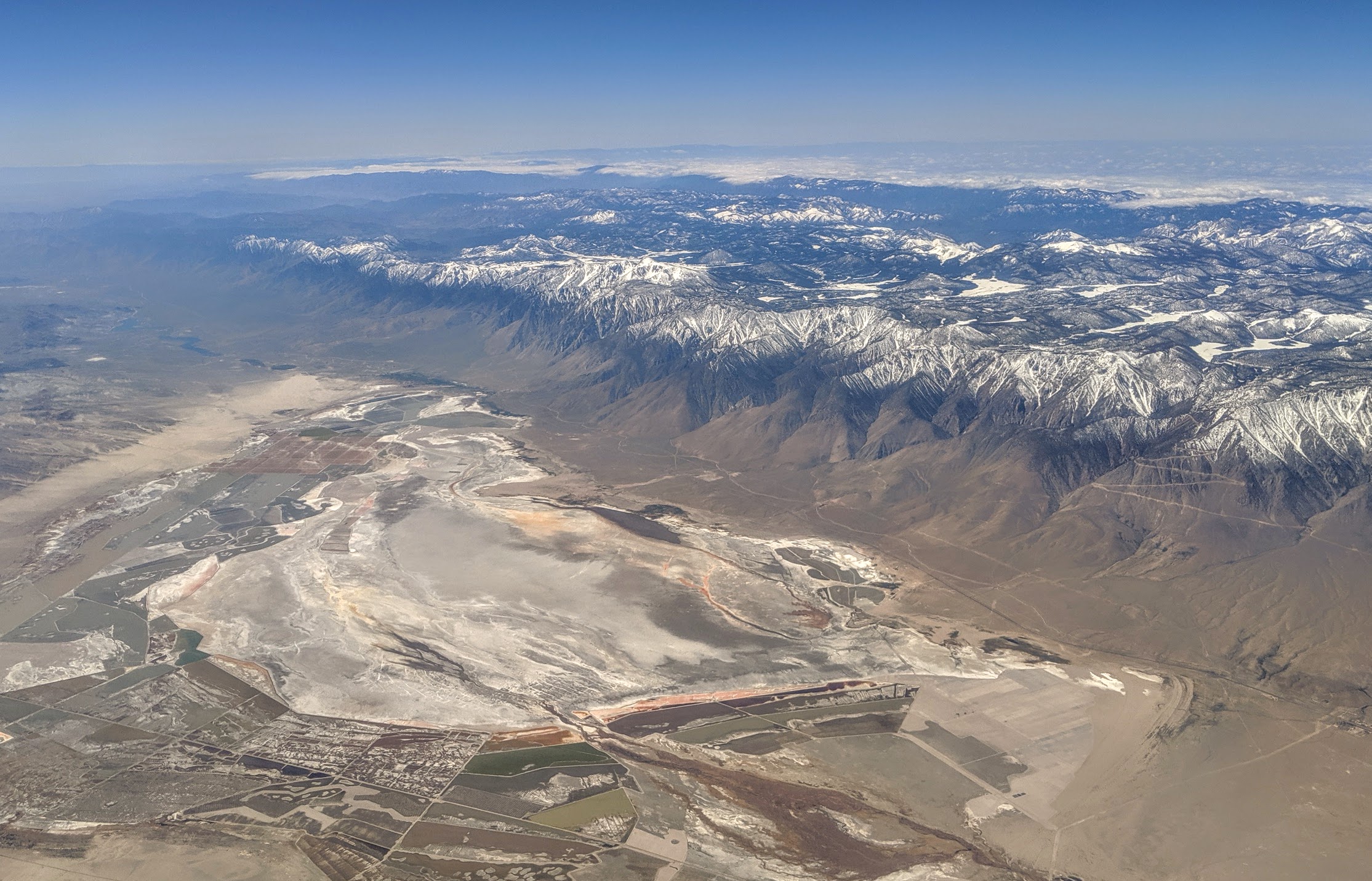
An aerial view of a dry Owens Lake.
Source: By Dicklyon - Own work, CC BY-SA 4.0, https://commons.wikimedia.org/w/index.php?curid=106194499.
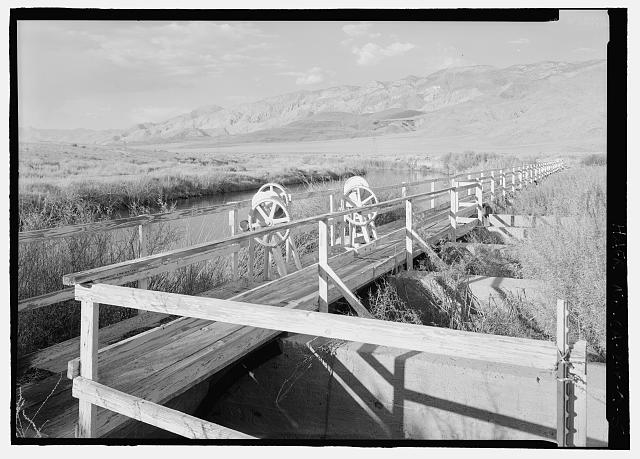
Owens River diversion gates.
Source: HAER CA-298-Q-5, Library of Congress Prints and Photographs Division, https://www.loc.gov/pictures/item/ca3161.photos.194209p.
As in the Moroccan protectorate’s adoption of California’s irrigation scheme, the Los Angeles Aqueduct was not solely a technological feat but also a legal and political tool for taking ancestral land and water from Indigenous communities. The 1939 Land Exchange Act—a congressionally authorized transfer involving the City of Los Angeles and the federal government—completed a longer arc of dispossession, giving the Los Angeles Department of Water and Power effective control over the federally reserved Native lands that remained in Owens Valley. In the process, local Paiute communities were dispossessed of their ancestral homeland in the valley, known as Payahuunadü (“Land of Flowing Water”), and confined to three small reservations totaling roughly 1,500 acres. Water rights for the Paiutes were excluded from this exchange, with the stipulation that the rights would be negotiated later—but, nearly a century later, they still have not been addressed.
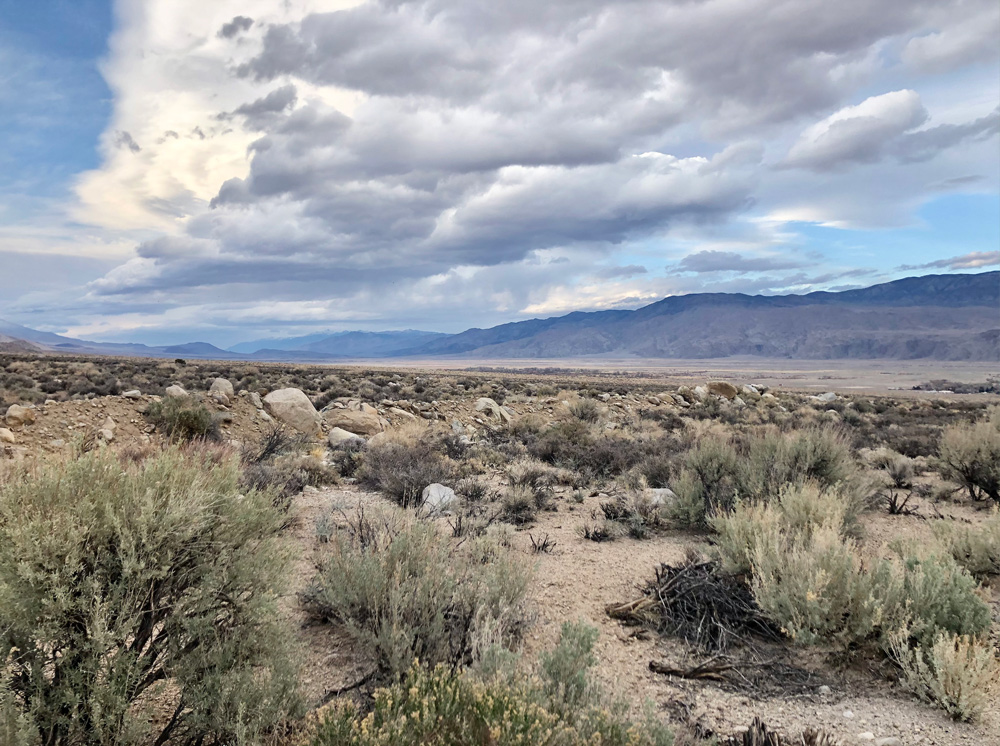
The landscape of the central Owens Valley, California.
Source: Courtesy of Frederic Wehrey.
In the meantime, the city of Los Angeles, through the aqueduct and groundwater pumping, continues to extract water from the valley at around 250,000 acre-feet per year—with continuing consequences for both local ecology and the health and livelihoods of Indigenous peoples.
“We didn’t have clean drinking water on the reservation when I was a kid,” noted Charlene Buff, a member of the Lone Pine Paiute-Shoshone Tribe and outreach coordinator on water issues. “It was a big surprise to realize that I hadn’t touched water that wasn’t affected by [the Los Angeles Department of Water and Power] until I went to the ocean.”6
“We’re just a water colony,” echoed Teri Red Owl, the executive director of the Owens Valley Indian Water Commission, a Paiute-Shoshone advocacy body.
The broader ideology of water extraction and technological triumphalism that underpinned the Owens Valley enterprise continued to spread across the American West, spearheaded at the federal level by the U.S. Bureau of Reclamation (see figure 5). Throughout the 1900s, the bureau constructed nearly 300 projects, predominantly in the western United States, designed to supposedly reclaim the region’s water for agricultural production. While projects on this scale have largely ceased in the United States—unlike in Morocco—their legacies continue to be felt, feeding unsustainable patterns of water consumption and chronic drought.
This transition has come at the expense of more sustainable, ancestral Indigenous water practices common in the region.
In the Owens Valley, for example, the local Paiutes long thrived using a network of hand-dug irrigation ditches to channel Sierra Nevada snowmelt onto fields of taboose, nahavita, and other staples. Much like the Amazigh khettaras, the management of these waterworks was highly communal and egalitarian, with an elected supervisor overseeing day-to-day functioning. Yet these systems began to degrade in the 1860s, as White ranchers and farmers moved into the Owens Valley and appropriated the Paiutes’ ditches and meadows for grazing and crop agriculture. And, by the early twentieth century, with the completion of the Los Angeles Aqueduct, they were largely extinct.
Similarly, the Pueblo peoples’ command of water in their arid climate drew desirous attentions from early White settlers, especially given their widespread use of acequias, an exonym used by Spanish colonists familiar with Moroccan seguias. This irrigation technology redirected excess surface water flows in an equitable manner to agricultural communities while supporting biodiversity and shallow aquifer recharge. Although still in use today, acequias are experiencing a decline due to their subordination to large-scale hydraulic systems and to external pressures on water supply.
Much like in Morocco, correcting the legacies of these colonial agricultural and hydrological interventions remains an uphill battle in the West—one that Indigenous communities have increasingly confronted directly, even as billions of dollars continue to flow into large-scale agricultural systems amid rapid urban growth in arid cities.
Despite their geographic distance and many differences, an examination of Morocco and the American West—especially California—underscores the importance of viewing contemporary climate vulnerabilities alongside the continuing socioeconomic and political impacts of historic, settler-era water regimes, particularly for marginalized Indigenous and rural populations. In both locales, extractive hydraulic projects and the legal systems that underpinned them dispossessed Native peoples of land and water, erasing traditional and often more sustainable modes of ecological stewardship while leaving these communities disproportionately exposed to climate stresses such as prolonged droughts and intensifying heat waves.
Yet these same pressures have also sparked mobilization—both for stronger climate protections and for the redress of earlier injustices. Refusing complacency, Indigenous and other rural communities on both sides of the Atlantic are lobbying governments, contesting laws, reshaping climate institutions, educating publics, forging new coalitions, and seeking to revive or maintain ancestral practices as forms of sustainable adaptation.
In response, policymakers in Morocco and the American West, to their credit, are increasingly incorporating these perspectives into climate strategies, recognizing the value of traditional ecological knowledge—especially place-specific, long-term observations of climate variability; locally rooted techniques for water, crop, and livestock management; sustainable fire prevention methods; and community-based decisionmaking structures that promote resilience during times of great uncertainty. This shift is backed up by a growing international consensus—embodied in the Sixth Assessment Report of the Intergovernmental Panel on Climate Change (2023)—that Indigenous knowledge systems should be treated as a foundation for effective climate adaptation, rather than a complement.
Still, there is more to be done: Recognition has not always led to implementation, due to a variety of political, economic, normative, and even linguistic obstacles across governance levels.
In Morocco, mobilization by Indigenous and rural populations is unfolding within an authoritarian political system that formally recognizes the role of grassroots actors while simultaneously constraining their participation and effectiveness. Most glaringly, these populations retain virtually no legal recourse to remedy government excesses, often meaning that compensation for land appropriation is insufficient or deferred. In theory, the 2011 Constitution provides a modicum of accountability, enshrining civil society’s role and guaranteeing freedoms of association, consultation, and participation in public policy. More recently, reforms associated with the policy of advanced regionalization have sought to decentralize authority and empower local governments, with implications for climate adaptation planning and implementation.
In practice, however, interviews with activists reveal a different reality. Where many have resorted to protesting government abuses with little success, even those seeking to exercise constitutionally protected rights have experienced a significant gap between the state and civil society. Government-led climate discourse continues to frame adaptation primarily as a technical or technological challenge, whereas residents of the country’s most remote and climate-affected rural areas, especially those in Amazigh-majority regions, tend to view it as a governance problem rooted in access, accountability, and control over resources.
As a result, civil society organizations working on climate and environmental issues operate under a subtle but consequential set of pressures. These include de-licensing threats, administrative delays, selective enforcements of regulations, and informal exclusion from decisionmaking forums, all of which encourage alignment with the state’s climate agenda and discourage activists from crossing ill-defined redlines, especially on rights-based or redistributive claims. Some groups fear arrest and imprisonment if they overtly protest.
Elsewhere, activists report the heavy hand of the state, not necessarily in response to protests but as a reaction to intercommunal conflict arising from climate-induced resource scarcity—scarcity that, in many cases, has been worsened by the regime’s water, land, and agricultural policies.
As noted by one rights activist, who also works on environmental and climate issues: “Climate change has economic and social impacts as well as civil and political ones. The problem of scarcity of resources can give rise to social tensions, which require the intervention of law enforcement. Ultimately, there is a problem of political strength.”7
Yet in many cases, such interventions seem geared toward the preservation of order rather than addressing—or redressing—underlying grievances. “Often, the government defaults to the status quo as opposed to establishing social justice,” noted a Moroccan researcher who has studied an Amazigh region afflicted by such resource-related tensions.8
Civil society organizations and other local actors that eschew politics and formally partner with the government on adaptation programs report that their involvement is often symbolic rather than substantive. Instead of being engaged early in planning processes or granted meaningful authority over budgets, implementation, and monitoring, they are typically relegated to narrowly framed “consultations” after key decisions have already been made.9 When consultations do occur, they are often complicated by gaps in norms, knowledge, and modes of communication between Morocco’s climate institutions and rural communities most affected by climate change. Notably, technical and scientific information is conveyed in formal Arabic or French, while the lived experience of vulnerability for many rural citizens is expressed in local dialects and, for the Amazigh, in Tamazight.10
Civil society can help bridge this divide when it acknowledges and works alongside customary, community-based structures, which carry far greater social legitimacy than official state channels. Among Amazigh communities, two such structures are especially important for climate adaptation: jamaa—a decisionmaking assembly that governs the use of land and water and that is especially vital during times of drought—and tiwizi—a system of collective labor and mutual aid that engages in environmental tasks such as reforestation and the maintenance of khettara. An example of climate-focused civil society that successfully integrates both bodies is the Association Tiflit, a grassroots water-users organization in the Iguiwaz Oasis. Acting as an intermediary between traditional ecological governance and Morocco’s central government, it works to revitalize and promote sustainable local practices, such as the tanast and the khettara, while also serving as the community’s legal representative with the government.
Crucially, elders are treated as “an essential group” whose knowledge and memory of environmental change must be preserved. And women—who comprise a third of the association’s membership––are similarly recognized as central to climate adaptation strategy, given their role as “the cornerstone of [Amazigh] oasis society.”
Equally important as the association’s degree of social inclusion is its approach to technology in local adaptation. Its approach carefully aligns civil society goals with entrenched systems where possible to better maneuver an otherwise monarchical system. Rather than framing techniques such as drip irrigation as a break with tradition, the association treats them as a complement to existing norms governing communal water allocation. This blending of modern innovation with Indigenous knowledge offers a useful model for sustainable cooperation among state institutions, civil society, and Indigenous structures elsewhere in the country.
It also serves as a corrective to the excessive romanticization of traditional systems and techniques. In many cases, it is not the technologies themselves that merit restoration or revival in climate adaptation, but rather the underlying principles of collectivity, equality, and respect for the ecological limits that circumscribe resource use.
In contrast to the civil society limits found in Morocco’s authoritarian system, Indigenous people in the American West are fighting for environmental and climate protections—and for the redressing of historical dispossessions—within a permissive, albeit fragmented, political and legal order that formally recognizes their rights, especially regarding water, but that often fails to deliver in practice. Confronted with these limits, many have turned to coalition-based advocacy and public awareness campaigns, shifting from defensive postures to more proactive climate partnerships that work on monitoring and adaptation through the rehabilitation of traditional knowledge. As in Morocco, state authorities are increasingly recognizing the value of these efforts, despite implementation lags, and activists report that their contributions are treated as an adjunct rather than as a foundation.
Throughout the twentieth century and into the present, the courts have served as a central arena for asserting and restoring Indigenous water rights, though the results have been mixed. The 1908 Winters doctrine established senior water rights for Native Americans, yet the federal government has consistently failed to secure this water in practice, often favoring settler development in the arid Southwest and necessitating repeated litigation. In the Owens Valley, for example, Paiute-Shoshone tribes filed suit in 2006 to address decades of water scarcity despite guarantees of sufficient water under the Land Exchange Act––though the case was ultimately dismissed, deferring long-sought development and groundwater table replenishment. Along the Colorado River water rights remain similarly contested, as illustrated by the Navajo Nation’s unsuccessful effort to compel federally mandated assistance in securing water. Taken together, these cases underscore the risks of costly court battles, which offer neither certainty of victory nor a standardized framework for water allocation.
As legal campaigns to redress past dispossession or block new extraction have proven slow or incomplete, many Indigenous communities have turned toward proactive adaptation strategies rooted in long-standing ecological practices that predate modern hydraulic infrastructure. Many of these initiatives draw on traditional cultivation methods historically well-suited to arid climates—among them, Zuni waffle gardens, Hopi dry farming, and the widespread three sisters intercropping method.
Beyond household- and community-scale cultivation, Native tribes are also deploying larger-scale traditional techniques to conserve water. The Ak-Chin Indian Community in Arizona, for example, has long used farming methods that capture excess rain and floodwaters while enhancing biodiversity. In New Mexico and Colorado, meanwhile, acequia associations representing hundreds of irrigation systems are working to revive and safeguard the region’s historic acequias—networks uniquely suited to climate resilience through their mitigation of aquifer depletion.
Taken in sum, these initiatives constitute welcome and long-overdue steps toward integrating Indigenous ecological norms and knowledge with government-directed environmental and climate policies.
The reception by state and federal authorities has generally been positive, if still incomplete. In the Southwest, several states have begun to employ Indigenous practices called prescribed burns to mitigate wildfires, though—as the tribes themselves point out—the prevalence of these fires points to deeper problems stemming from the legacy of the region’s historic hydraulic order and the resulting overconsumption of water. For its part, California has advanced this integration further through the California Water Boards’ 2019 Tribal Consultation Policy, which requires tribal input on hydraulic policies that may impact the livelihood, health, and cultural heritage of Native tribes. On climate change, the California Environmental Protection Agency (CalEPA) has engaged Indigenous peoples across the state in documenting and raising awareness of climate impacts, including through a standing Tribal Advisory Committee.11
At the federal level, meanwhile, the congressionally mandated Climate Adaptation Science Centers (CASCs) link nine regional hubs and a national center to provide applied science for climate adaptation in fish and wildlife management. One of these, the Southwest CASC—launched in 2011 and led by the University of Arizona—has made tribal engagement central to its work, generating a decade of partnerships with Indigenous communities focused on research and experimentation.
From the perspective of some Native communities, however, the impact of these partnerships and consultative bodies on the ground has been uneven. As in Morocco, consultation has not always translated into meaningful influence in decisionmaking or policy outcomes.
While acknowledging that California has often been “ahead of the game” on environmental issues, Paiute conservationist Noah Williams, who serves on the CalEPA Tribal Advisory Committee, described a persistent disconnect between the state’s “dominant institutional mindset” and the tribe’s traditional ecological knowledge. 12 More broadly, Williams noted that interactions with tribal liaison officers—though frequently constructive—did not always reach senior decisionmakers or generate concrete, actionable outcomes. The formulation of California’s climate policy, he added, was further hindered by a fragmented bureaucracy at odds with Indigenous understandings of the environment.
“It is frustrating working with the state,” Williams explained, “because [state officials] silo air and water and things like that, whereas that is not the way we in the tribal environmental offices deal with it. In the natural world, air and water and land aren’t siloed.”13
Given their disappointments with both procedural consultations and the limits of litigation, Native communities in California and throughout the American West have increasingly turned to grassroots campaigning, public outreach, and knowledge production to redress historic dispossession and bolster climate protection.
In the Owens Valley, for example, this shift is embodied by the Owens Valley Indian Water Commission, formed by several Paiute organizations in the early 1990s as a collective advocacy and coordinating body rather than a vehicle for litigation. Born of dissatisfaction with tribal exclusion from water governance, the commission was designed to amplify Native voices and to educate both decisionmakers and the broader public, who, as voters, are positioned to play a decisive role in changing the codes and legislation that have underpinned the dispossession of Native peoples.
With the accelerating effects of global warming, this outreach—and broader goal of redressing dispossession—has assumed increased importance.
“Climate change has only underscored the urgency of us securing our long-term water rights,” observed Williams, who pointed to the decaying water infrastructure on Paiute reservations and concerns about food sovereignty.14
The long shadow of colonial-era water projects is no mere historical footnote. Through their dismantling of traditional—and often more sustainable—systems of agricultural and hydrological governance, these projects entrenched the dispossession and socioeconomic marginalization of Indigenous peoples and other rural communities, thereby worsening their exposure to present-day climate change. Climate adaptation strategies that ignore these legacies risk reproducing the very inequalities that make vulnerability so acute.
Across both Morocco and the American West, Native peoples and other marginalized groups are hardly standing still. Employing a range of legal, consultative, and outreach strategies tailored to their respective political contexts, they are pushing simultaneously for the redress of past injustices and for stronger climate protections—goals that many see as inseparable. In doing so, they are presenting themselves to state authorities as indispensable partners whose lived experiences of climate change and traditions of ecological stewardship can form the basis for more effective, equitable, and locally rooted policies.
Read together, these seemingly disparate cases highlight transferable lessons and best practices that can strengthen climate adaptation efforts in similarly arid and unequal settings.
First, policymakers need to close the persistent gap between the recognition of Indigenous knowledge and capacity and the meaningful integration of this know-how into climate policies. In Morocco, consultation between state authorities and Amazigh communities remains constrained by political redlines, the power of hydraulic coalitions, and a centralized policy culture. In California and elsewhere in the American West, engagement is weakened by bureaucratic siloing, weak accountability, and the dominant financial and political clout of interest groups. In both settings, cultural miscommunication and low public awareness have furthered the marginalization of Indigenous peoples and vulnerable communities, as well as their ability to partner with the state. Civil society and public education can help—but only to a point.
More broadly, and consistent with the findings of the United Nations Development Programme and other bodies, effective adaptation requires moving beyond symbolic consultation and toward a shared authority over priorities, budgets, and implementation. Here, financing is key. Despite large flows of climate funding, Indigenous communities in both Morocco and the American West have struggled to access monetary resources directly, either because they are operating through intermediaries that dilute their priorities or, more commonly, because adaptation projects serving marginalized groups are not seen as lucrative by investors.
“You can find money for mitigation projects easily,” noted the Moroccan Amazigh researcher Said Skounti, “but not for adaptation, since these solutions do not generate enough profits for potential projects.” The solution, he explained, is to create “bankable solutions” for Indigenous communities, as well as increase their direct access to loss and damage funds.15
Second, governments need to prioritize the equitable resolution of Indigenous claims to water and land as pillars of climate adaptation and resilience. The continuing failure to address these claims—which include Amazigh communal lands affected by dams and green energy projects in Morocco and tribal water entitlements deferred by legislation in America—severely weakens the ability of communities to respond to climate shocks.
Finally, and perhaps most importantly, local administrators, scientific and technocratic bodies, and civil society groups should treat Indigenous knowledge as a set of norms and governing logics, rather than a collection of archaic technologies or, worse, ethnographic curiosities. Confronted with the ravages of climate change—and the legacies of colonial water regimes—long-neglected institutions and technologies like khettaras, agdals, and acequias offer vital models for how collective resource management and ecological restraint can produce more sustainable adaptation strategies. The goal, then, is not to replicate these systems wholesale, but rather to embed their core principles—equity, seasonality, and communal accountability—into contemporary water and agricultural policy. Doing so means ensuring that these principles are both preserved within the community and transmitted to the next generation. Here, Indigenous women and elders—who, in Morocco, the American West, and elsewhere, are playing crucial roles as leaders in ecological knowledge and as agents for change—should feature more prominently in adaptation strategies.
Underpinning all these shifts is the imperative to move beyond long-standing paradigms of hydraulic domination toward coexistence within ecological limits. Indigenous stewardship traditions offer alternative approaches that treat water as finite and collectively governed—an approach that, in the face of global warming, will be essential for durable adaptation.
As the Paiute environmental specialist Noah Williams succinctly put it: “Water is a relation, not a resource.”16
The authors are grateful to the activists, policy specialists, and scientists from Morocco and the American Southwest who shared their insights with us. In addition, we extend our thanks to Ahmed Skounti, Sally Manning, and Richard Potashin for their assistance in preparing this paper.

Senior Fellow, Middle East Program
Frederic Wehrey is a senior fellow in the Middle East Program at the Carnegie Endowment for International Peace, where his research focuses on governance, conflict, and security in Libya, North Africa, and the Persian Gulf.
Charles H. Johnson
James C. Gaither Junior Fellow, Middle East Program
Charles H. Johnson is a James C. Gaither Junior Fellow in the Carnegie Middle East Program.
Carnegie does not take institutional positions on public policy issues; the views represented herein are those of the author(s) and do not necessarily reflect the views of Carnegie, its staff, or its trustees.

The U.S.-Iran war has crossed a dangerous threshold: water infrastructure in the Gulf is now a target. Ecological statecraft is no longer peripheral to security, it's part of its foundations.


Olivia Lazard, Ali Bin Shahid
Barriers ranging from weak legal frameworks to ongoing, occupation-related limitations are constraining Palestine from achieving its ambitious climate targets.

Joy Arkeh, Nabil Nasser
When municipalities and local actors are empowered with regulatory authority, knowledge, and resources, they can fill critical governance gaps.

Sabine Saad
For Morocco, integrating gender into climate governance is not simply a matter of social justice. It is a strategic imperative for effective adaptation.
Fadwa Rajouani
Lebanon is caught in a cycle of financial meltdown, political instability, and climate change.

Ilda Nahas