

Commentary
Barbara Weisel
{
  "authors": [
    "Barbara Weisel"
  ],
  "type": "commentary",
  "centerAffiliationAll": "dc",
  "centers": [
    "Carnegie Endowment for International Peace"
  ],
  "collections": [
    "Economic Risk in Asia",
    "Dynamic Security Risks in Asia"
  ],
  "englishNewsletterAll": "asia",
  "nonEnglishNewsletterAll": "",
  "primaryCenter": "Carnegie Endowment for International Peace",
  "programAffiliation": "AP",
  "programs": [
    "Asia"
  ],
  "regions": [
    "Asia",
    "East Asia",
    "China"
  ],
  "topics": [
    "Trade",
    "Economy",
    "Foreign Policy"
  ]
}
Source: Getty
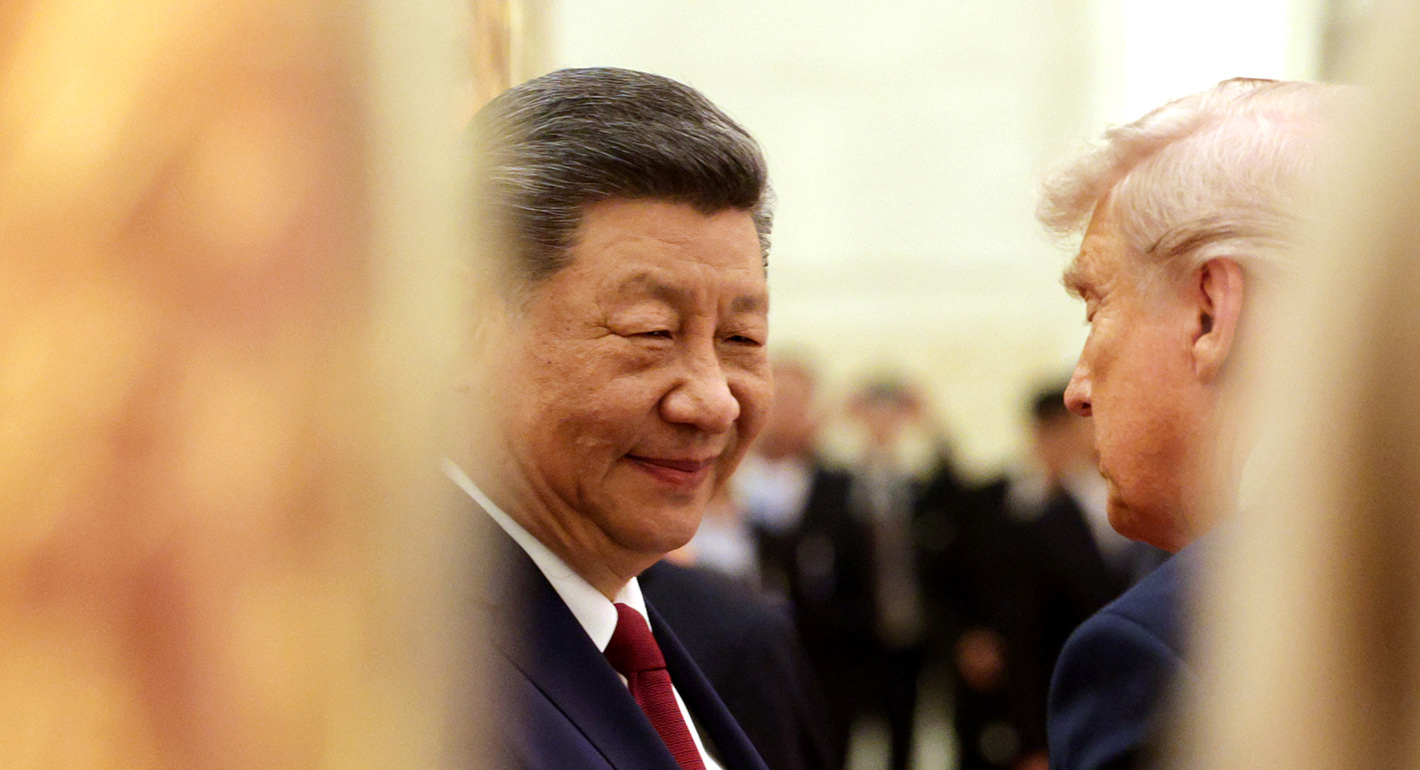
The U.S.-China Summit produced a welcome commitment to build a constructive, strategically stable relationship. However, the United States has a full agenda, including the USMCA review beginning this week, that will likely target Chinese practices of concern. If China views these efforts as inconsistent with the agreements reached in Beijing, it may slow or halt progress in response.
The U.S.-China summit delivered a widely anticipated and welcome outcome: Both sides agreed to manage and stabilize the relationship. That was the only realistic result. Neither country wants tensions to escalate further, and there is little prospect of a breakthrough that would resolve the underlying sources of friction. Instead, the two governments agreed to manage economic tensions through measures intended to “enhance stability and build confidence.”
But the confluence of events on the trade agenda in the coming months will make achieving even the limited goal of managing economic tensions more challenging than some experts are asserting. These include implementing the understandings reached in Beijing; the new U.S. Section 301 trade investigations on sixty countries that will provide a legal pathway for replacement of the International Emergency Economic Powers Act (IEEPA) tariffs that the Supreme Court struck down in February; a review of the U.S.-Mexico-Canada Agreement (USMCA), which will begin this week; and ongoing U.S. negotiations of bilateral Agreements on Reciprocal Trade with key trading partners. China appears better positioned than the United States to shape how the trade truce agreed at the summit unfolds, not only in the coming months, as the Iran war–induced inflation increases pressure on President Donald Trump’s administration ahead of the midterm elections, but possibly beyond.
The new U.S.-China Board of Trade, which is meant as a forum for managing bilateral trade tensions, has been tasked with fleshing out the details of the bilateral understanding reached at the summit. Trade teams will seek agreement on rollbacks of selected tariffs imposed in recent years, purchase commitments, and measures to address non-tariff barriers, including restrictions related to critical minerals, a U.S. priority. The immediate task will be to agree on a package of roughly $30 billion in “non-sensitive” goods—not further defined—that both sides see as balanced and of “equivalent scale.” If the two governments reach agreement, the United States could begin more strategically targeting its tariffs on China that have burdened U.S. consumers and manufacturers while also providing relief to Chinese manufacturers.
Even in the summit afterglow, however, striking a deal on a package the United States and China see as balanced may not be easy, and each side may link tariff cuts to other priorities. Both governments’ readouts targeted domestic audiences but also underscored the distrust that remains between the countries and the political sensitivity in Washington around any actions that could be seen as softening the U.S. posture toward China. The U.S. factsheet, for example, made no mention of cutting tariffs on Chinese goods, saying that the board of trade would manage bilateral trade across non-sensitive goods. China’s readout, meanwhile, termed the outcomes preliminary and highlighted the need for “win-win outcomes” and “mutually beneficial cooperation”. The United States listed specific critical minerals on which it said China had agreed to address U.S. concerns while China said the two sides would jointly study and resolve each other’s legitimate concerns. China agreed to purchase 200 Boeing aircraft—if the United States provides adequate supplies of engines and spare parts. The order was the first since 2018 but is well below what had been expected, causing Boeing stock to drop 4 percent, likely because Beijing wants to maintain leverage in the ongoing trade negotiations.
The United States and China agreed to establish a new U.S.-China Board of Investment that U.S. Treasury Secretary Scott Bessent said will help decide the nonstrategic, nonsensitive areas where China could invest in the United States and avoid screening by the Committee on Foreign Investment in the United States. Despite President Trump’s support, implementing this agreement will be politically controversial in the United States, and draw criticism for undercutting the comprehensive update to U.S. investment screening put in place during the first Trump administration, largely targeting China. It is also seemingly inconsistent with efforts by the administration and members of Congress to get trading partners to limit Chinese investment for national security reasons and, in the USMCA review, to prevent China from using Mexico as a backdoor to the U.S. market.
The work of the board of trade will unfold as the United States conducts new Section 301 investigations into forced labor practices and industrial overcapacity in China and dozens of other countries. The administration is expected to announce replacement tariffs sometime before July 24, when the stopgap tariffs imposed after the IEEPA ruling are set to expire.
To shape expectations and control the terms of the negotiation, the two sides are already setting out their alternative positions publicly on the arrangements to be finalized by the board of trade. China says it understands the United States will raise tariffs soon but not above the levels set in last November’s trade and critical minerals truce. Bessent, however, said the Trump administration is “not in a rush” to extend that truce and could do so later this year. He added that China would likely accept a return to the previous Section 301 tariff levels, provided they do not go higher, because China benefited from the invalidation of the IEEPA tariffs. China’s response remains unclear, but Beijing likely believes it has a reasonably strong bargaining position. Although both countries are concerned about inflation driven by tariffs and the Iran war, the issue has more immediate political salience in the United States as the midterms approach. Recent U.S. polling shows a majority of Americans disapprove of the Trump administration’s broad tariff increases because they believe they result in higher prices, further diminishing the credibility of new U.S. tariff threats.
A central U.S. objective in the USMCA review, which is kicking off this week with bilateral negotiations between the United States and Mexico, is to limit inputs from non-market economies—read: China (although Vietnam is captured as well)—in North American supply chains and to encourage reshoring. The United States and Mexico have said they will do so through greater cooperation on economic security, rules of origin, and complementary trade actions. U.S. attention appears focused on the automobile, steel and aluminum, and electronics sectors. The three countries may also consider aligning their tariffs or their trade remedies on certain strategic goods to protect their industries from dumping or state subsidies, particularly from companies from non-market economies. In addition, they plan to coordinate closely their export controls and investment screening policies.
China is monitoring closely developments related to the USMCA review but has not yet signaled how it will respond to any new rules it sees as threatening its interests. Beijing is also likely watching to see whether the United States imports these stronger rules into the bilateral Agreements on Reciprocal Trade or if other countries view the new USMCA rules as a template for limiting imports from China. It will be especially sensitive to measures that it views as discriminatory and has an arsenal of tools it could use in response.
At the same time Canada, Mexico, and other trading partners negotiating bilateral agreements with the United States will watch closely for signs that Washington is softening its stance toward Beijing. They understand there are a range of views in the Trump administration on China policy and that President Trump himself is not ideological about China policy but rather transactional. Still, should the United States lock in tough China-related measures into USMCA or the Agreements on Reciprocal Trade, it will be harder for Washington to relax its position in negotiations with China without cascading effects on its relations with other U.S. partners.
Each side may calibrate its strategy to maximize its position ahead of the additional leaders’ meetings expected this year, but they recognize the alternatives to their uneasy truce is far worse. Both China and the United States believe the agreement they reached will benefit their economies and buy them time to strengthen their competitiveness. Each also wants to preserve leverage on its priority issues, defend its interests, and avoid appearing to have been outmaneuvered by the other.
Still, competing policy goals and the deep mistrust leaves ample room for missteps or for progress to grind to a halt. Statutory requirements will limit U.S. flexibility in managing the timing of its tariff decisions, and, for example, could force Washington to act on the new section 301tariffs before a U.S.-China consensus on tariff issues has been reached. Domestic politics, especially in the United States, will also constrain maneuverability. For its part, China may want to assess U.S. agreements with other trading partners before deciding how to pace and manage its ongoing and future engagements with the United States. If it concludes these other agreements contradict or undermine the understandings it has with the United States, China may slow or suspend negotiations and pressure U.S. partners not to cooperate with Washington. As always, collateral damage to the bilateral trade agenda could result if tensions flare over security or geopolitical issues, for example Taiwan policy. And although the announcement that the two sides have agreed to bilateral discussions on AI governance is a positive development that, if productive, would open the door to meaningful cooperation, any material outcomes are unlikely in the near term.

Nonresident Scholar, Asia Program
Barbara Weisel is a nonresident scholar in the Asia Program at the Carnegie Endowment for International Peace and the former U.S. chief negotiator of the Trans-Pacific Partnership.
Recent Work
Barbara Weisel



James M. Acton, Saskia Brechenmacher, Cecily Brewer, …

Ongoing uncertainty in the Middle East allows Moscow to both increase its influence in Tehran and continue to enjoy the financial windfall of higher oil prices.

Nikita Smagin
To carry out its global AI agenda, Washington will need strategic relationships with emerging markets in Africa, starting with Kenya.

Jane Munga

Europe’s industrial supply chains leave it vulnerable to global shocks. The EU needs a pragmatic green industrial strategy that balances durable partnerships and bolsters homegrown clean tech without sacrificing low-carbon ambition.


Milo McBride, Pauline Gerard

Defense tech innovations will be at the heart of Europe’s new security strategy. But so far, Brussels has been making moves without a broader plan, undermining readiness and credibility.

Raluca Csernatoni
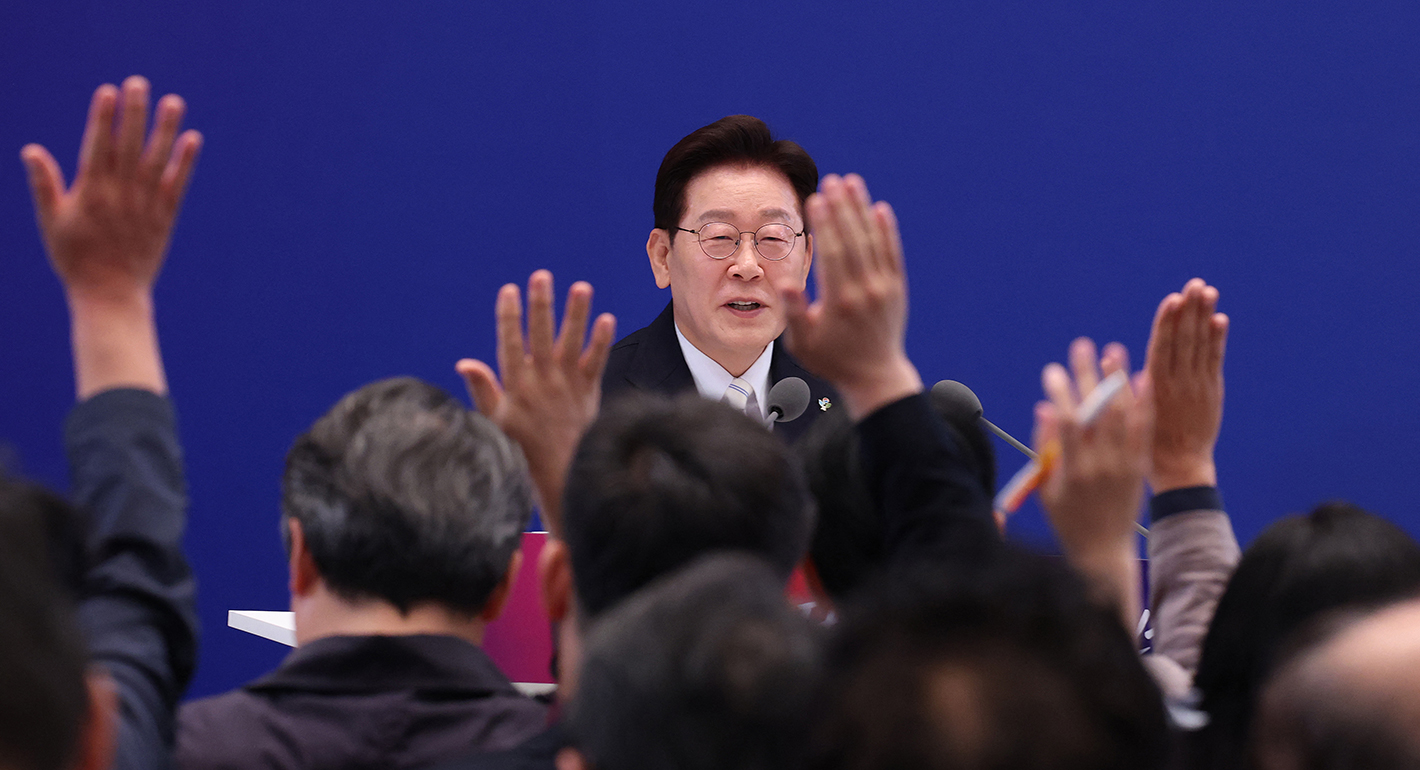
President Lee marked his first year in office after one of the most tumultuous periods in South Korean politics. Though Lee has enjoyed a high approval rating, a large majority in the National Assembly, and foreign policy victories, Lee and his party’s political fortunes depend on generating economic growth, learning the right lessons from the recent local elections, and managing contentious factional strife within his political base.

Chung Min Lee