

Commentary
Angie Omar
{
  "authors": [
    "Angie Omar"
  ],
  "type": "commentary",
  "blog": "Diwan",
  "centerAffiliationAll": "",
  "centers": [
    "Carnegie Endowment for International Peace",
    "Malcolm H. Kerr Carnegie Middle East Center"
  ],
  "englishNewsletterAll": "",
  "nonEnglishNewsletterAll": "",
  "primaryCenter": "Malcolm H. Kerr Carnegie Middle East Center",
  "programAffiliation": "",
  "regions": [
    "Middle East",
    "Egypt",
    "Morocco"
  ]
}
Source: Getty
There is a disturbing structural parallel between the old global energy economy and the new green transition.
We are used to looking at the Middle East and North Africa (MENA) region through the geopolitical lens of wars, borders, and oil pipelines. But today, a resource struggle is playing out under our noses, wrapped in a very clean, eco-friendly package. What is being presented by Western countries as a global green transition is, in many cases, reproducing old patterns of economic dependence under a new environmental banner. In fact, when you strip away the polite diplomacy and the dry academic terminology, the climate-related action required of the developing world looks less like a shared global rescue mission and more like climate colonialism by the developed world.
To see the unfairness at the heart of this system, all you have to do is look at who caused the mess versus who is paying for it. Over the past two centuries, Western nations built their wealth, powered their cities, and secured their high standards of living by burning fossil fuels without a second thought. They effectively used up the world’s carbon budget in order to get rich. Now that the planet is facing an ecological crisis, the same countries want to impose universal emission targets on everyone equally.
It is a glaring double standard. Having reached a plateau of sorts, the industrialized West is essentially kicking out the developmental ladder behind it and telling those countries still building their infrastructure that they aren’t allowed to clamber up. This tension has historically strained relations between several Western countries and China, which is arguably the world’s foremost developing power. China aside, the MENA region, which has contributed a tiny fraction of historical global emissions but now bears the brunt of the physical consequences—from heatwaves to dried-up water sources—has not escaped the attention of the West. The latter continues to demand immediate, drastic emission cuts by the MENA countries.
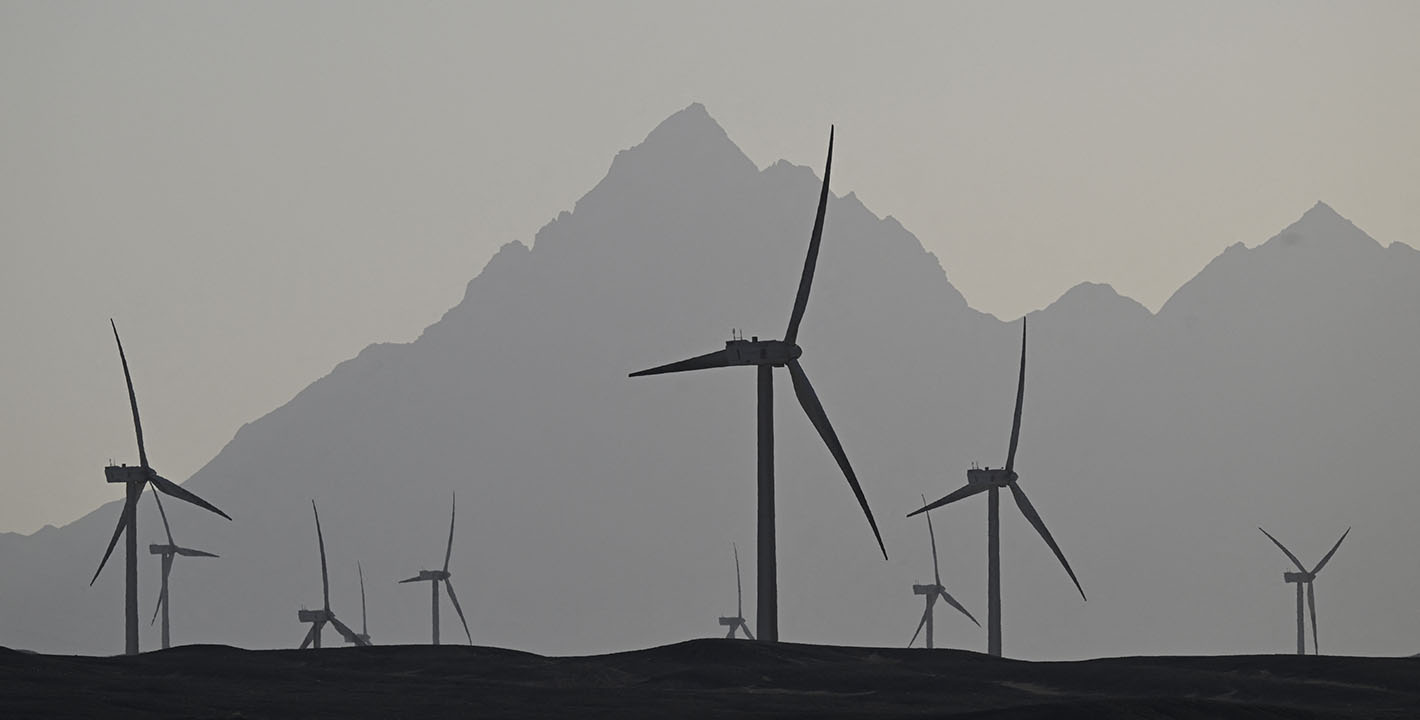
Western states are also turning to Egypt and Morocco as prime locations for large-scale renewable energy and green hydrogen projects. With their abundant sunshine, wind resources, and proximity to Europe, these and other MENA nations are a favorable location for such enterprises, which are celebrated as beautiful examples of international cooperation in pursuit of renewable energy. However, if you look at where the power actually goes, the reality is chastening. A huge chunk of the clean electricity generated by these mega-projects isn’t being used to stabilize local power grids, prevent regional blackouts, or lower utility bills for the communities living in the vicinity of solar panels. Instead, it is being sent directly across the Mediterranean via massive undersea cables to power European factories, light up European homes, and charge European electric cars.
Even the international “carbon offset” market—whereby companies strive to compensate for their emissions by paying for green projects elsewhere that are intended to absorb an equivalent amount of carbon dioxide—has turned into a territorial grab. Major Western polluters such as commercial airlines, oil conglomerates, and Silicon Valley technology giants don’t want to cut their emissions because that would hurt their profits. To offset their burning of fossil fuels, these firms buy up huge tracts of land in developing countries such as Kenya, Tanzania, Uganda, and Zimbabwe, plant trees there, and then claim that they’ve “neutralized” their pollution. Companies that have done this include Delta Air Lines, Shell, Microsoft, Meta, and TotalEnergies. Critics argue that carbon offsetting reduces the incentive to cut emissions at the source while shifting the burden onto developing countries.
Then there is the financial trap. When MENA (and other) countries ask for the capital they need to adapt to severe climate shocks, such as rising sea levels threatening the fertile soil of Egypt’s Nile Delta, their Western counterparts rarely respond with direct compensation or reparations for the global damage their centuries-long industrialization has caused. Instead, the West offers “climate finance,” which is usually just a fancy term for high-interest sovereign loans. Vulnerable nations are forced to take on massive debts just to survive a crisis they didn’t create.
This creates a predatory cycle in which poor countries must divert their limited national budgets to pay back foreign banks in Washington, London, or Brussels, instead of investing that money into their own healthcare, education, or public services. During the 2022 United Nations Climate Change Conference in Sharm al-Sheikh, Egypt repeatedly urged wealthy nations to provide larger grants as well as compensation for climate-related losses suffered by hard-hit countries. Though initiatives such as Egypt’s Nexus of Water, Food and Energy program—an action plan for combating the effects of climate change—have attracted billions of dollars, much of the support still comes through loans and blended finance rather than direct compensation. This adds to concerns that the West is saddling climate-threatened economies with significant debt.
It’s as though colonialism didn’t disappear when foreign empires pulled their troops out of the MENA region. The new variant, climate colonialism, has dispensed with flags in favor of corporate sustainability targets, carbon credits, and promises of a world gone green. Yet the structural parallel between the old global energy economy and the new green transition is impossible to ignore. Historically, the West exploited MENA’s oil in order to fuel its rise to power. Today, it is exploiting the region’s sun, wind, and land to clean up the toxic side effects of that ascent. The West secures for itself green energy, clean air, and the right to lecture the rest of the world on sustainability, while countries from the Middle East to North Africa are left with droughts, mounting debt, and a new layer of economic dependency.
Climate change is a real and terrifying emergency that requires urgent action. But the global framework ostensibly meant to combat it is rooted in power, not fairness. In fact, the rules are rigged against the people paying the highest price. Only when wealthy nations begin treating climate finance as a matter of historical responsibility—providing grants instead of loans, supporting local ownership of renewable projects, and ensuring that developing countries are the first to benefit from their own natural resources—can the green transition become a genuinely equitable phenomenon. Until then, with environmental policies designed exclusively in Western capitals and corporate boardrooms, renewable energy will remain wedded to an extractive industry.

Editor-in-chief, Sada
Angie Omar is an accomplished international journalist, editor, producer, and writer with a wealth of experience in the news and politics industries.
Recent Work
Angie Omar
Angie Omar
Carnegie does not take institutional positions on public policy issues; the views represented herein are those of the author(s) and do not necessarily reflect the views of Carnegie, its staff, or its trustees.
This will be the region’s most representative tournament, amid broad changes in its footballing landscape.

Issam Kayssi
Cairo’s efforts send a message to the United States and the region that it still has a place at the diplomatic table.
Angie Omar
As Iran defends its interests in the region and its regime’s survival, it may push Hezbollah into the abyss.

Michael Young
The recent African Cup of Nations tournament in Morocco touched on issues that largely transcended the sport.

Issam Kayssi, Yasmine Zarhloule
In an interview, Shahla al-Kli discusses the country’s parliamentary elections and what they reveal.
Rayyan Al-Shawaf